11 Months of Melasma Management Through a Barrier-First Approach
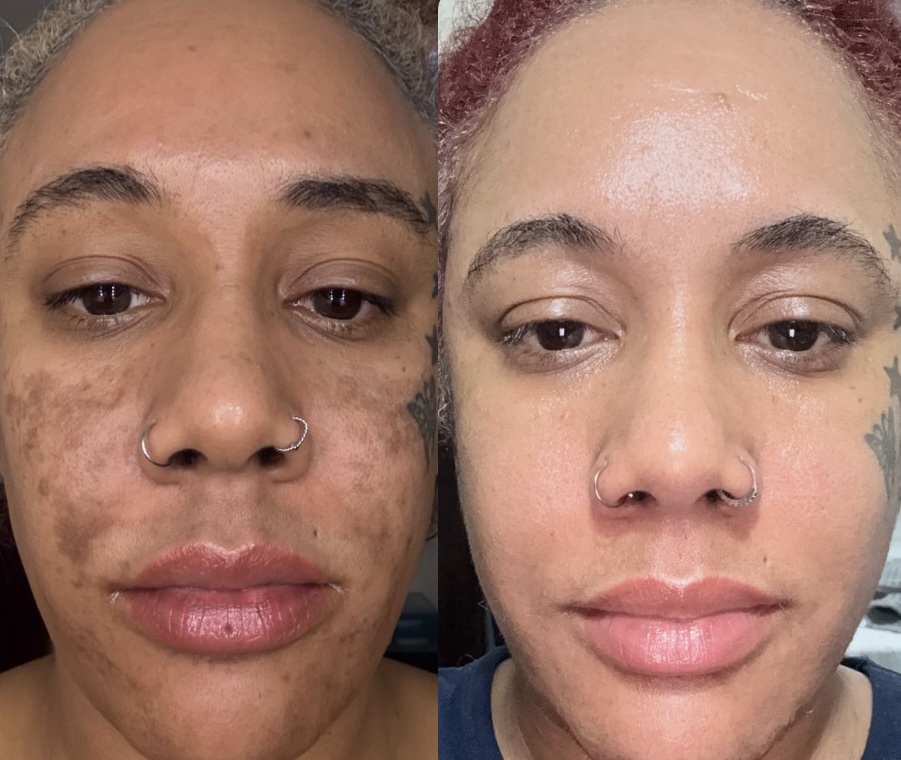
These images are approximately 11 months apart and represent the result of a strategic, conservative approach to melasma management focused on barrier integrity, melanocyte regulation, and long-term skin health.
One of the biggest mistakes I see in treating melanated skin is attempting to aggressively remove pigment before addressing the underlying inflammation and barrier dysfunction contributing to melanocyte stimulation.
👉🏽Phase 1: Barrier Repair & Inflammation Reduction
Before any pigment correction was initiated, the primary focus was restoring skin barrier function and reducing chronic inflammation. This phase involved simplifying homecare, eliminating unnecessary stimulation, supporting hydration, and creating an environment where melanocytes were less likely to remain in a heightened state of activity.
For melanated skin, this step is not optional. Barrier impairment and inflammation can significantly contribute to post-inflammatory hyperpigmentation and melanocyte dysregulation.
👉🏽Phase 2: Pigment Correction & Melanocyte Inhibition
Once barrier function improved, we introduced targeted pigment correction strategies with a strong emphasis on melanocyte regulation rather than aggressive pigment removal.
Tranexamic Acid (TXA) became the star of the protocol due to its ability to help reduce pathways involved in melanocyte activation and pigment production.
Additional professional and homecare support included:
• Dermalogica PowerBright Dark Spot Serum
• Strategic use of tranexamic acid homecare
• Conservative treatment intervals designed to minimize inflammation while maintaining progress
Throughout treatment, the goal was never to “attack” the pigment, but rather to create a calmer environment where melanocytes were less likely to continue overproducing melanin.
👉🏽Phase 3: Brightening & Maintenance
As pigment activity stabilized, we slowly introduced professional exfoliation protocols to support continued brightening while preserving barrier integrity.
Treatment progression included:
• Dermalogica PowerBright Peel beginning once every other week
• Gradual progression to twice weekly use as tolerated
• Dermalogica UltraBright Peel incorporated strategically due to its lactic acid content and its ability to provide gentle exfoliation while supporting hydration
Lactic acid can be particularly beneficial in melanated skin when used conservatively because it provides exfoliation with a lower risk of triggering unnecessary inflammation compared to more aggressive resurfacing approaches.
The Most Important Part of This Journey Was Not the Treatment. It Was the Strategy.
There was no guessing.
There was no aggressive correction.
There were no random products.
Every step of homecare was intentional, specific, and continuously evaluated based on skin response.
Melasma management in melanated skin requires patience, consistency, barrier preservation, and an understanding that long-term improvement often comes from doing less, not more.
11 months.
One strategy.
One goal:
Support healthy melanocyte behavior while protecting the skin that houses them.