Understanding Skin Pigmentation & The Ingredients That Help Fade Dark Spots
If you’ve ever wondered why skin develops dark spots, uneven tone, or discoloration—and more importantly, how to treat them—you’re not alone. Pigmentation concerns like melasma, tanning, post‑acne marks, and age spots are some of the most common skincare issues worldwide. To treat them effectively, it helps to first understand how pigmentation works inside the skin.
Let’s break it down in a simple, science‑backed way.
What Exactly Is Skin Pigmentation?
Our skin color comes from melanin, a natural pigment produced by specialized cells called melanocytes. Melanin protects the skin from UV damage—but when it’s produced in excess or distributed unevenly, it leads to hyperpigmentation.
According to recent research, melanin is synthesized inside tiny cellular factories called melanosomes, using enzymes such as tyrosinase—the key controller of the entire pigment‑making process.
Once made, melanosomes move from melanocytes into surrounding skin cells. This transfer step is now recognized as just as important as melanin synthesis itself for how pigmentation appears on the skin’s surface.
Why Does Pigmentation Happen?
Hyperpigmentation can be triggered by various factors:
Sun exposure: UV light boosts melanin production.
Hormones: Often linked to melasma.
Inflammation: Acne marks and post‑inflammatory hyperpigmentation.
Genetics: Some skin types are more prone to pigment changes.
Certain medications or skin irritants
Many of these triggers stimulate the skin to produce more melanin or transfer more melanosomes to the upper layers—creating visible dark spots.
The Best Actives to Reduce Pigmentation
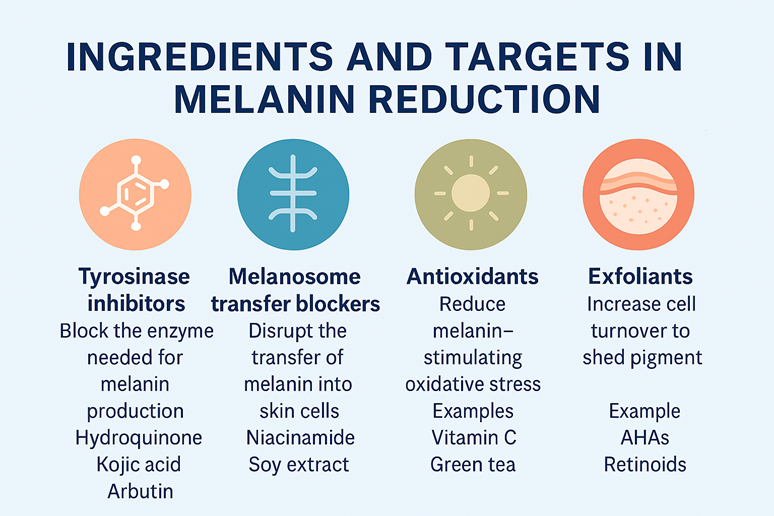
Here’s the exciting part: modern skincare has evolved far beyond simple “skin lightening.” Today’s ingredients target different steps of the pigmentation pathway—from melanin production to melanosome transfer and even melanin breakdown.
Let’s explore some powerful, science‑backed options.
1. Tyrosinase Inhibitors (Control Melanin Production)
These ingredients stop pigmentation at the earliest stage—by preventing the formation of melanin.
Hydroquinone
Long considered the gold standard, hydroquinone blocks tyrosinase effectively. However, long‑term use may cause irritation, making it more suitable for short‑term or dermatologist‑guided treatment.
Kojic Acid
A natural compound from fungi, kojic acid reduces melanin by binding to copper in tyrosinase. Effective, but can sometimes cause sensitivity.
Arbutin
A gentle, plant‑derived counterpart to hydroquinone, perfect for long‑term brightening.
Peptides
Emerging research shows that certain bioactive peptides can decrease melanin formation with fewer side effects—making them one of the most exciting new categories in pigmentation care.
2. Melanosome Transfer Inhibitors (Stop Pigment Spread)
Even if melanin is formed, it must travel to surface skin cells to become visible. Blocking this transfer step helps significantly reduce the appearance of dark spots.
Recent studies highlight natural and synthetic compounds that disrupt melanosome transfer—offering a new, often gentler way to tackle hyperpigmentation.
3. Antioxidants (Fight Oxidative Stress + Brighten)
Oxidative stress and inflammation amplify pigmentation. Antioxidants help interrupt this cycle.
Vitamin C
Powerful for brightening, neutralizing free radicals, and inhibiting pigment formation.
Botanical Extracts
Ingredients like licorice extract and green tea provide anti‑inflammatory and pigment‑reducing benefits—great for sensitive skin types.
4. Melanin Degradation Boosters
Rather than stopping pigment creation, these help the skin break down and shed existing melanin more quickly, accelerating fading.
Ingredients such as linoleic acid (commonly mentioned in pigmentation research) contribute to breaking down melanin inside keratinocytes.
5. Future‑Forward Targets: Melanosome Transport & Processing
Beyond well‑known actives, new research spotlights the importance of:
Melanosome transport machinery
Keratinocyte‑driven melanin processing
Post‑melanosome degradation pathways
These emerging targets promise next‑generation skincare solutions that work at multiple levels of the pigmentation pathway.
Final Thoughts
Pigmentation isn’t caused by just one thing—and that’s why the most effective skincare solutions combine multiple strategies. From traditional tyrosinase inhibitors like kojic acid to innovative peptide technologies and melanosome‑transfer blockers, modern science offers more options than ever before.
Whether you're dealing with sunspots, acne marks, melasma, or uneven tone, understanding the why behind pigmentation helps you choose the right ingredients and treatments for your skin.