Growth Factors, Stem Cells, Exosomes, and Peptides: What’s the Difference?
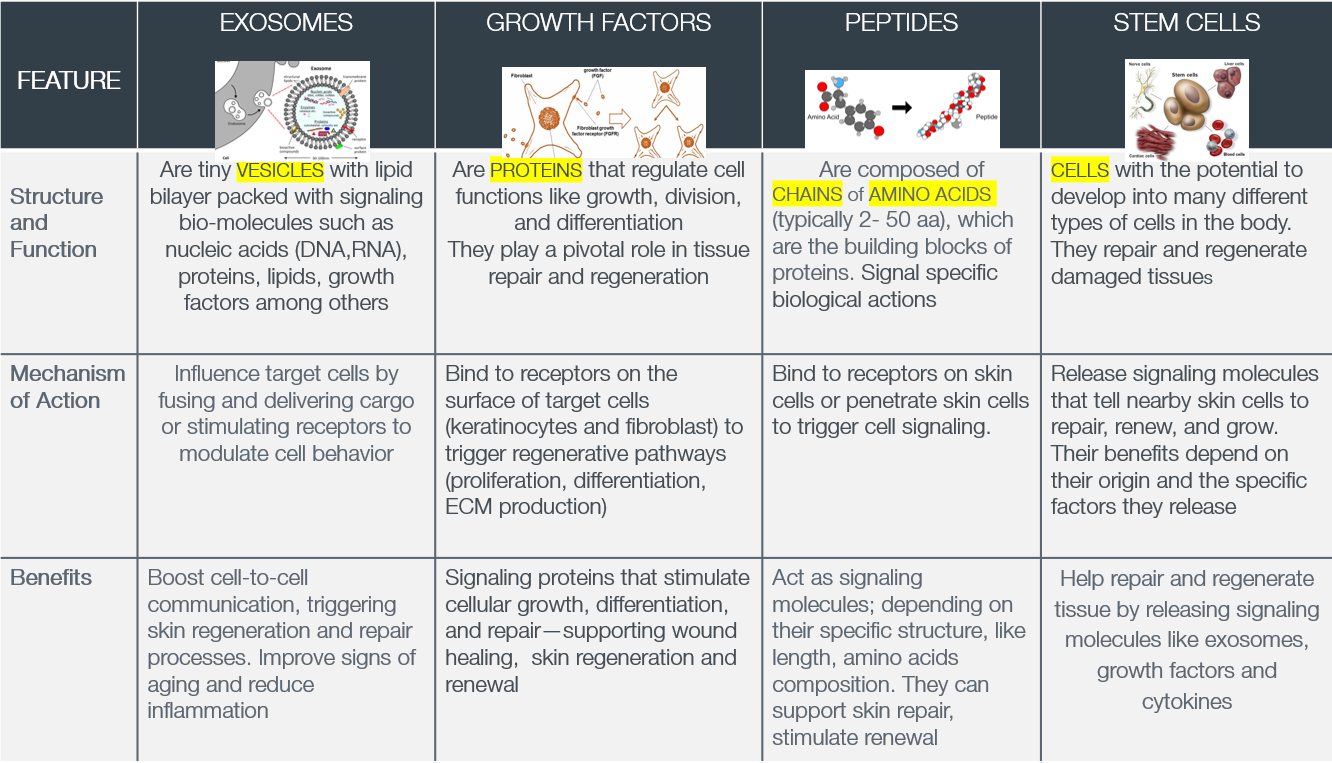
At The International Dermal Institute, we are often asked about the latest advanced ingredients in skincare. Terms like growth factors, stem cells, exosomes, and peptides appear everywhere in product marketing, but their meanings and their roles in skin health are often misunderstood. Let’s break them down clearly so you can understand how each contributes to skin renewal and repair.
Growth Factors: The Skin’s Messengers
Growth factors are naturally occurring proteins found in the body that signal skin cells to grow, divide, and repair damage. Think of them as “messengers” that tell your skin when it’s time to heal, regenerate collagen, or replace old cells. In skincare, lab-engineered growth factors aim to mimic this natural communication, supporting smoother texture and faster recovery from environmental stress.
Key role: Boost cell communication for healing and repair.
Stem Cells: The Source of Renewal
Stem cells are the body’s “master cells,” capable of transforming into many different types of specialized cells. While skincare products don’t contain live human stem cells, they often use plant stem cell extracts. These extracts are rich in antioxidants and signaling molecules that help protect the skin from free radical damage and encourage resilience.
Key role: Support antioxidant defense and resilience (not to “replace” skin cells).
Exosomes: The Delivery Vehicles
Exosomes are tiny vesicles (think of them as little bubbles) released by cells that carry proteins, lipids, and genetic material from one cell to another. They act as delivery vehicles, transferring instructions that can stimulate collagen production, reduce inflammation, or improve cellular communication. In skincare science, exosomes are being explored as a highly targeted way to amplify regenerative signals.
Key role: Deliver information and nutrients between cells to optimize skin function.
Peptides: The Building Blocks
Peptides are short chains of amino acids, the very building blocks of proteins like collagen and elastin. In skincare, different peptides have different “messages”: some signal the skin to produce more collagen, others calm irritation, and some improve hydration. Because they are small, peptides can penetrate skin easily and act quickly on specific concerns.
Key role: Targeted support for collagen, hydration, and repair.
Putting It All Together
While these terms may sound interchangeable, they represent different layers of skin science:
Growth Factors = messengers for repair.
Stem Cells = sources of renewal and antioxidant protection.
Exosomes = delivery systems for cellular communication.
Peptides = building blocks and targeted messengers.
Used thoughtfully, these technologies can complement each other in modern formulations, giving professional skin therapists and clients powerful tools for healthier, more resilient skin.
At IDI, our goal is always to translate complex science into practical, usable knowledge. Understanding the distinctions between these advanced ingredients empowers you to select products and treatments with confidence and to guide your clients with authority.