The Skin’s Repair Window: What Happens After a Professional Treatment?
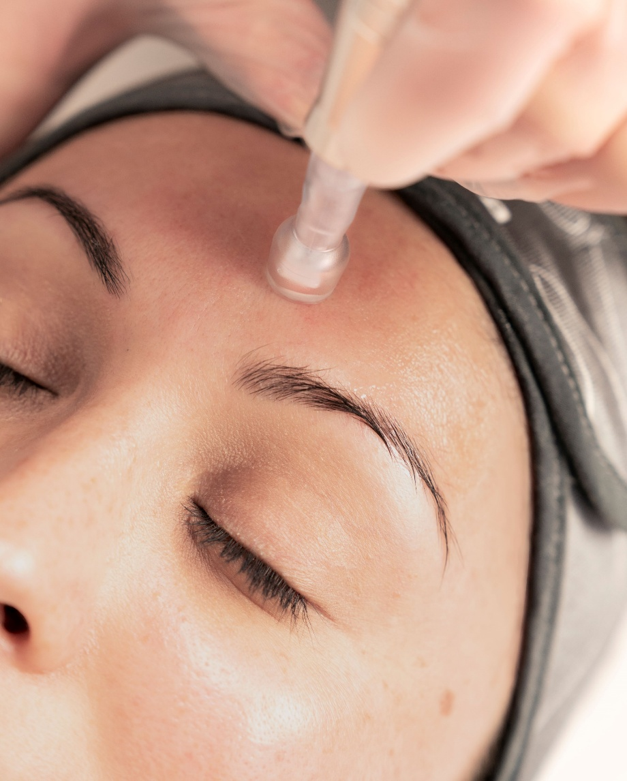
When we perform a professional skin treatment, we often focus on what happens during the service: the ingredients we apply, the technology we use, and the immediate response we see in the skin. But some of the most important changes happen long after the treatment is complete.
From microneedling to chemical peels, many professional treatments work by creating a controlled stimulus that encourages the skin to renew, repair, and rebuild. This initiates a fascinating series of biological events involving cellular communication, inflammation, tissue repair, and remodeling.
Understanding what happens during this repair window can help us make more informed treatment decisions, support better client outcomes, and recognize why recovery is just as important as the treatment itself.
1. The Initial Response: Sending the Signal
The moment the skin experiences a controlled injury or disruption, it begins communicating.
With microneedling, tiny needles create microchannels in the skin. Chemical peels, on the other hand, create a controlled chemical injury at varying depths, depending on the formulation, concentration, and application.
Although these treatments work differently, both can initiate biological processes associated with skin renewal and repair.
When skin cells detect damage, they release signaling molecules, including cytokines and growth factors, which communicate with surrounding cells and help coordinate the response.
Think of it as the skin sending out a message: Something has changed. It's time to respond.
Where blood vessels are disrupted, platelets also become involved, helping control bleeding and releasing growth factors that contribute to the early stages of repair.
2. The Inflammatory Phase: Preparing for Repair
When it happens: Immediately following treatment through the following days, depending on treatment depth and intensity.
Inflammation often gets a bad reputation in skin care, but a controlled, short-term inflammatory response plays an important role in tissue repair.
During this phase, immune cells are recruited to the affected area to help remove damaged cells and debris. These cells also release signaling molecules that help coordinate the transition into tissue repair.
This is why clients may experience temporary:
Redness or changes in skin tone
Warmth
Swelling
Increased sensitivity
Dryness or tightness
However, more inflammation does not necessarily mean better results.
While a controlled inflammatory response can support repair, excessive or prolonged inflammation may compromise barrier function, increase the risk of post-inflammatory hyperpigmentation (PIH), and interfere with healthy recovery.
As skin professionals, our goal is not to create the strongest possible response, but to create an appropriate response that the skin can successfully recover from.
3. The Proliferative Phase: Rebuilding the Skin
When it happens: Over the following days and weeks, overlapping with the inflammatory phase.
As the initial inflammatory response begins to resolve, the skin shifts its focus toward rebuilding.
Two particularly important cells during this phase are:
Keratinocytes: These cells help restore the epidermis by migrating and proliferating to repair areas of disruption and re-establish the skin's protective surface.
Fibroblasts: Located within the dermis, fibroblasts respond to biological signals and produce components of the extracellular matrix, including collagen, when dermal repair is involved.
The extracellular matrix, or ECM, is the structural network that surrounds and supports skin cells. It contributes to the skin's strength, organization, and mechanical properties.
Growth factors and other signaling molecules help coordinate these cellular activities, making communication between cells an essential part of successful repair.
This is also where the depth of a professional treatment matters. A superficial chemical peel primarily promotes epidermal renewal, while microneedling that reaches the dermis can stimulate a deeper tissue repair response.
Not every treatment produces the same degree of collagen stimulation or tissue remodeling.
4. The Remodeling Phase: Results Take Time
When it happens: Over the following weeks to months when deeper tissue repair has been initiated.
One of the most interesting aspects of professional skin treatments is that the skin may continue changing well after visible signs of recovery have disappeared.
During remodeling, newly deposited collagen and other extracellular matrix components are gradually reorganized. Existing matrix components are broken down and replaced, helping improve the organization and strength of the repaired tissue.
This is one reason why the benefits of collagen-stimulating treatments may develop gradually rather than immediately.
A client might notice that their redness has resolved, or their skin feels smoother within a few days, but this does not necessarily mean that all the underlying biological processes are complete.
Visible recovery and biological recovery are not always the same thing.
The Connection to Regenerative Skin Care
As regenerative skin care continues to evolve, technologies such as growth factors, peptides, and exosomes are bringing greater attention to the role of cellular communication in skin health.
Rather than focusing solely on removing surface cells or stimulating the skin, regenerative approaches explore how we can support the biological processes involved in renewal, repair, and resilience.
But understanding the skin's natural repair process is essential to understanding these technologies.
Growth factors are involved in coordinating cellular activity. Certain signaling peptides are designed to influence specific cellular responses. Exosomes are cell-released vesicles that can carry biological messages between cells.
While these technologies are different, their relevance to regenerative skin care highlights an important concept: the way skin cells communicate can influence how the skin responds, adapts, and repairs.
Of course, the effectiveness of a topical formulation depends on factors such as its composition, stability, delivery, and ability to reach its intended target. Not every product claiming regenerative benefits has demonstrated the same effects.
Why Recovery Is Part of the Treatment
As skin professionals, it can be tempting to focus on what we can add to a treatment plan: another modality, a stronger peel, or an additional active ingredient.
But sometimes, the most valuable thing we can give the skin is time.
Supporting the skin during its repair window may involve:
Prioritizing barrier support: Helping restore hydration and protective barrier function.
Managing inflammation: Avoiding unnecessary irritation while the skin is recovering.
Spacing treatments appropriately: Allowing adequate recovery before introducing another significant stimulus.
Protecting against UV exposure: Supporting recovery and reducing the risk of pigmentary complications through appropriate sun protection.
Individualizing the treatment plan: Considering the client's skin condition, treatment history, sensitivity, and tendency toward hyperpigmentation.
Recovery recommendations should always reflect the specific treatment performed, its depth and intensity, and the client's individual response.
Remember, a successful treatment isn't simply about how much we can stimulate the skin. It's also about how well the skin can respond to that stimulation.
The Takeaway
Professional treatments may initiate the process, but the skin does the work.
From the first cellular signals to the gradual remodeling of collagen, the skin's repair response is a coordinated biological process that requires both stimulation and recovery.
As we continue exploring regenerative skin care and skin longevity, understanding this repair window reminds us that our role as skin professionals extends beyond the treatment itself. It's about creating the conditions that allow the skin to recover, adapt, and maintain its resilience over time.
The next time you perform a professional treatment, consider not only what you want to stimulate in the skin today, but what you want the skin to be capable of tomorrow.
Let's talk about it!
As skin professionals, how do you determine when a client's skin is ready for their next professional treatment? Do you follow a set treatment schedule, or do you adjust based on how their skin has recovered?
Share your approach in the comments!