The Skin Microbiome + Acne: Why Breakouts Are Not Just About “Bad Bacteria”
When talking about acne, it is easy to focus on bacteria as the problem.
For years, acne conversations often centered around the idea that breakouts happen because bacteria are present in the follicle. While bacteria do play a role in acne, the full picture is much more complex. Acne is not simply about “bad bacteria” needing to be eliminated. It is influenced by the skin barrier, oil production, follicular buildup, inflammation, immune response, hormones, lifestyle factors, and the overall balance of the skin’s microbiome.
For industry professionals, this is an important shift. When we understand acne through the lens of the microbiome, our conversations with clients can become less about stripping, drying, and fighting the skin, and more about supporting a healthier skin environment.
What is the skin microbiome?
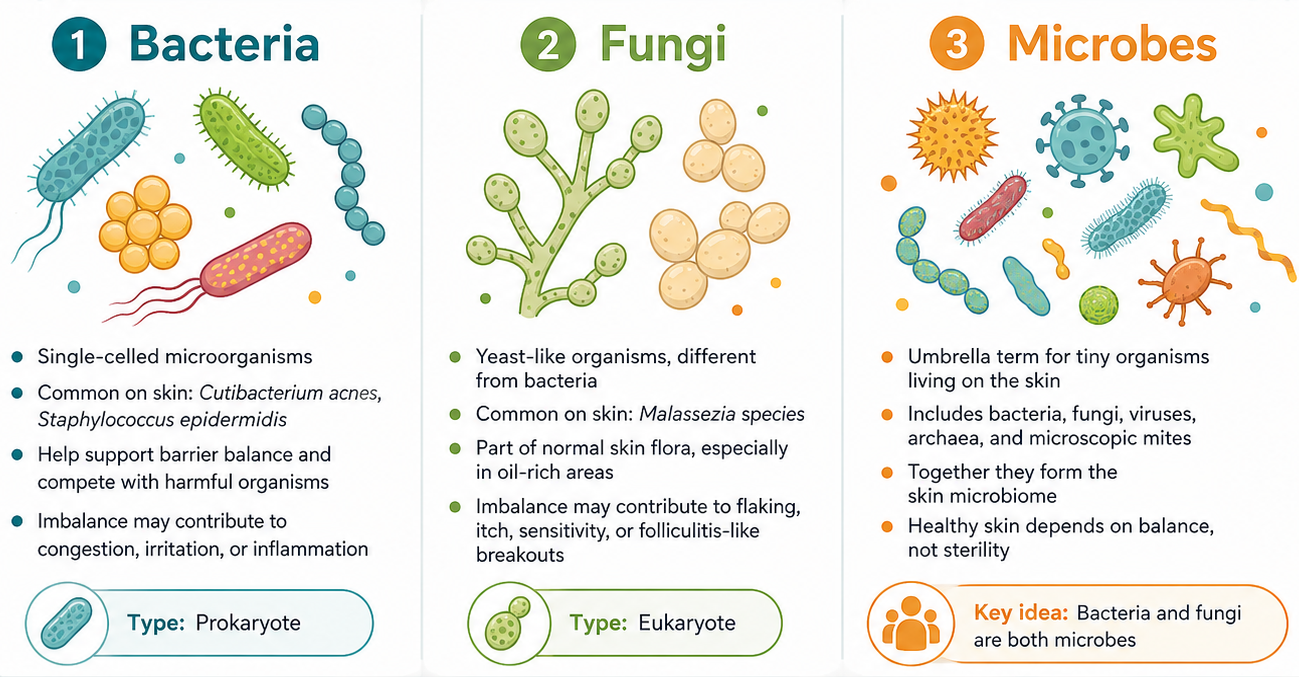
The skin microbiome refers to the community of microorganisms that live on the skin’s surface, including bacteria, fungi, and other microbes. These microorganisms are not automatically harmful. In fact, many are part of a healthy skin ecosystem.
The skin is not meant to be sterile. It is a living, active barrier that relies on balance. A healthy microbiome helps support the skin’s protective function, contributes to immune signaling, and plays a role in how the skin responds to external stressors.
When this ecosystem is balanced, the skin is better equipped to protect itself. When that balance is disrupted, the skin may become more vulnerable to irritation, barrier stress, inflammation, and visible changes in skin condition.
Acne and Cutibacterium acnes
One of the most discussed microbes in acne is Cutibacterium acnes, often shortened to C. acnes.
C. acnes naturally lives on the skin, especially in areas rich in sebaceous glands. That means its presence alone does not automatically mean there is a problem. Many people have C. acnes on their skin without experiencing acne.
The difference is often not simply whether C. acnes is present, but how the skin environment is functioning around it. Factors such as excess sebum, follicular buildup, changes in microbial balance, inflammation, and the client’s immune response can all influence how acne develops.
This is why acne should not be reduced to “bacteria on the skin.” The same microbe can exist as part of a normal skin environment or become involved in inflammation when the conditions within the follicle shift.
Why “killing bacteria” is not the whole answer
Many acne clients seek professional advice believing their skin is dirty or that they need to wash more aggressively to clear their breakouts. This can lead to over-cleansing, over-exfoliating, skipping moisturizer, and layering too many acne-focused products at once.
The result is often the opposite of what they want.
When the skin barrier becomes compromised, the skin may feel tight, dry, shiny, irritated, or more inflamed. Clients may interpret this as their acne getting worse because their skin is still “not clean enough,” when in reality, their skin may be struggling to recover from too much disruption.
A harsh approach can disturb the very environment we are trying to support. While acne treatments may be appropriate, they need to be balanced with barrier care, hydration, and realistic pacing.
The microbiome, barrier, and inflammation connection
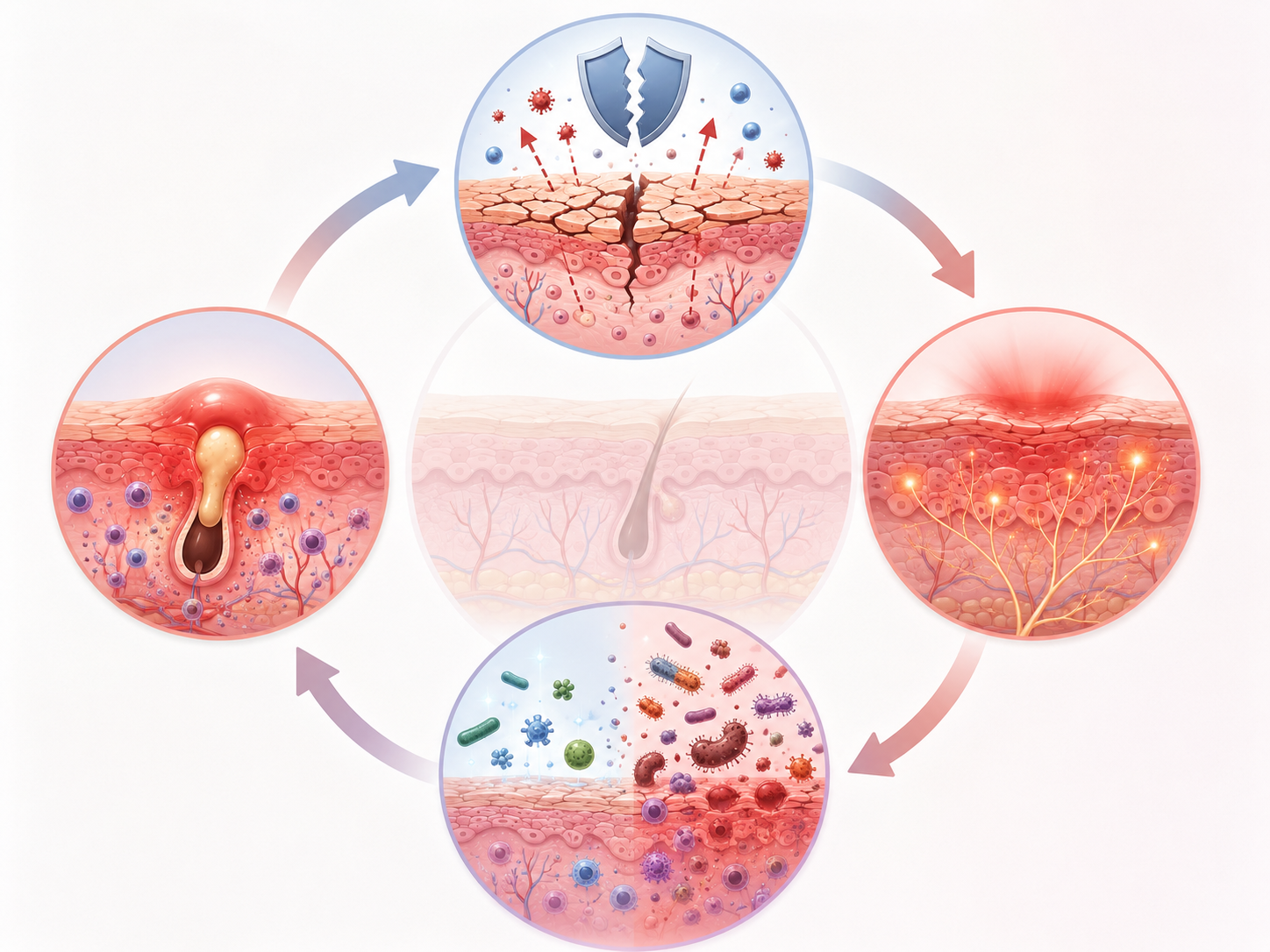
The skin barrier and microbiome are closely connected.
The barrier helps create the environment where the microbiome can remain balanced. At the same time, the microbiome helps support the barrier by interacting with the skin’s immune system and helping defend against external stressors.
When barrier function is impaired, the skin may be more reactive. When the microbiome is disrupted, the skin may be more prone to imbalance. These shifts can contribute to inflammation, which is a key part of acne.
This is especially important because acne is an inflammatory condition. Even before a breakout becomes visibly red or swollen, inflammatory processes may already be active within the skin.
For professionals, this means our goal is not just to “dry out” acne. The goal is to help create a skin environment that supports clearer, calmer, more resilient skin over time.
What this means for professionals
Microbiome-aware acne care does not mean avoiding active ingredients or professional treatments. It means using them thoughtfully.
For example, a client with oily, resilient skin and non-inflamed comedones may tolerate a different approach than a client with inflamed acne, visible dehydration, and a compromised barrier. Two clients may both have “acne,” but their skin may need very different support.
This is where professional judgment matters.
A microbiome-aware acne consultation may include questions such as:
• How often is the client cleansing?
• Are they using multiple exfoliants or acne actives?
• Are they moisturizing consistently?
• Is the skin tight, stinging, flaky, or irritated?
• Are they picking or trying to extract lesions at home?
• Are they using products that may be too drying or sensitizing?
• Are they expecting acne products to work by making the skin feel stripped?
These questions help us understand not only what the client is using, but how their skin is responding.
Client education: acne-prone skin still needs support
One of the most helpful things we can teach acne clients is that acne-prone skin still needs care, comfort, and barrier support.
Many clients associate moisturizers, oils, and gentle products with “clogging” the skin. They may feel that if a product does not tingle, sting, or dry out the breakout, it is not doing anything.
This is a major education opportunity.
Supporting acne-prone skin may include a gentle cleanser, appropriate hydration, non-comedogenic moisturization, sunscreen when tolerated, targeted acne treatments, and professional services selected based on the client’s lesion type, sensitivity, and skin condition.
The routine should feel manageable. A complicated routine with too many actives can easily overwhelm the skin and the client.
Why this matters for long-term acne management
Acne management is rarely about one product, one treatment, or one ingredient. It is about consistency, education, and adjusting the plan as the skin changes.
When we understand the role of the microbiome, we can move away from the idea that acne-prone skin needs to be attacked. Instead, we can help clients understand that their skin is an ecosystem that needs balance.
That does not mean acne clients should avoid treatment. It means we should treat strategically, protect the barrier, reduce unnecessary irritation, and support the skin’s natural defense systems whenever possible.
Acne is not simply a sign that bacteria are “bad.” It is a complex skin condition influenced by the relationship between sebum, follicles, microbes, inflammation, barrier function, and the immune response.
For professionals, that understanding can change the way we educate, treat, and support clients through their acne journey.
Professional Takeaway
The skin microbiome reminds us that acne-prone skin is not dirty skin. It is skin that may be experiencing imbalance, inflammation, barrier stress, and changes within the follicular environment.
When we support the skin ecosystem instead of stripping it, we can help clients build a healthier foundation for long-term acne care.