Sunscreen: From Behind the Treatment Bed
An Evidence-Based Perspective for Professional Skin Therapists
As skin therapists, we wear many hats when guiding our clients through their skin health journey — from age prevention to achieving long-lasting results. Yet sunscreen is often mentioned briefly at the very end of a treatment, sometimes when time has already run short.
It’s time we gave sunscreen the space and education it truly deserves — so our clients can achieve and maintain the results they’re investing in.
Let’s explore the role of sunscreen from a professional perspective — from behind the treatment bed — and discuss practical ways skin professionals can integrate meaningful sunscreen education into daily practice.
The Role of Sunscreen in Preventing the “Big C” (Cancer)
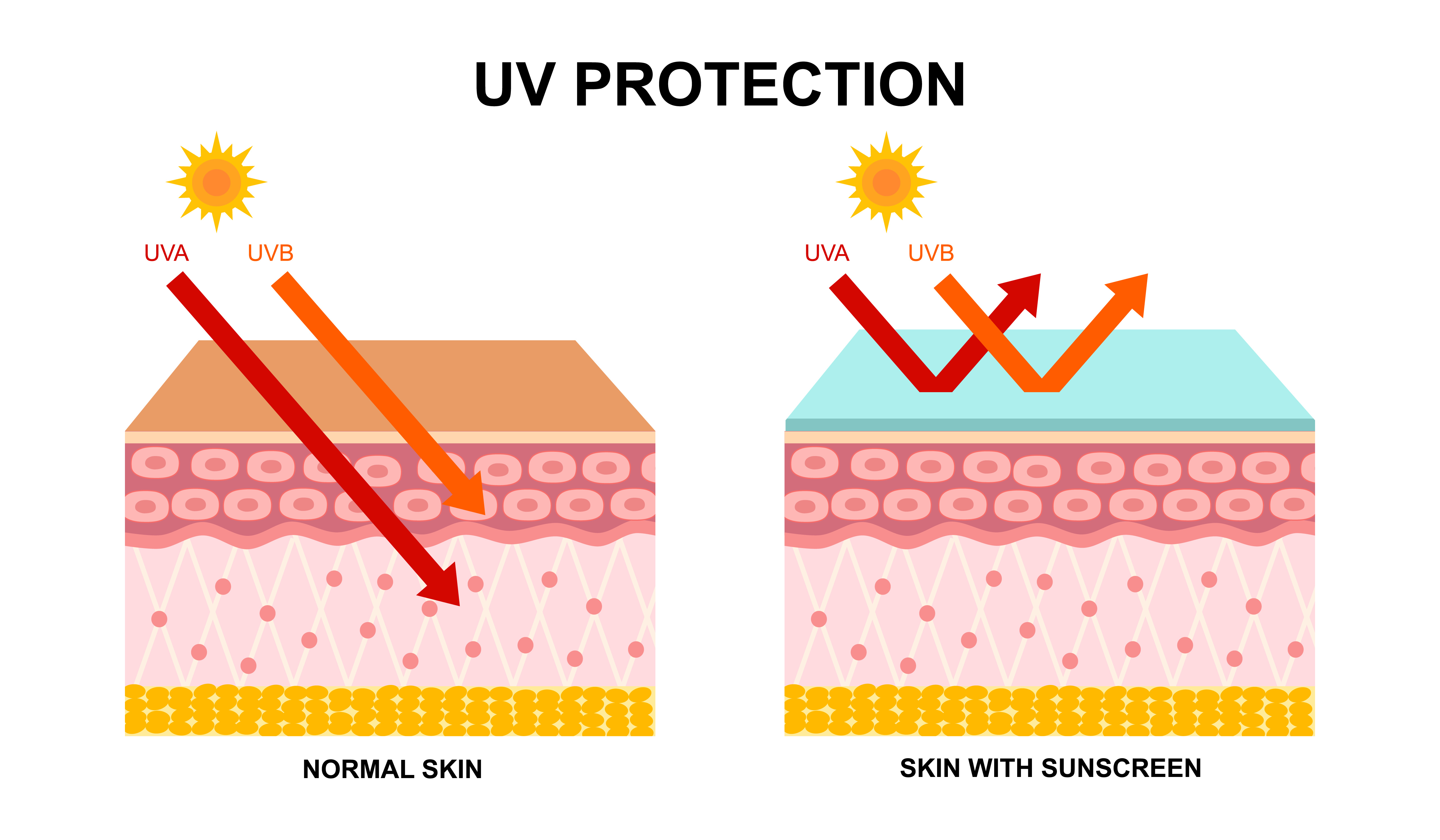
Ultraviolet (UV) radiation remains the most significant environmental risk factor for skin cancer. Both UVA and UVB rays contribute to DNA damage, local immunosuppression, and cumulative cellular changes that increase cancer risk over time.
UVB (B for burning) is primarily responsible for erythema (sunburn) and direct DNA damage.
UVA (A for aging) penetrates deeper into the dermis and contributes to oxidative stress, photoaging, and indirect DNA damage. UVA is present year-round, regardless of season or cloud cover.
Daily use of a broad-spectrum sunscreen has been shown to lower the risk of precancerous lesions like actinic keratoses and skin cancers such as squamous cell carcinoma. It’s one of the most important tools we have in protecting long-term skin health
While sunscreen is not a standalone solution, it is a critical daily defense when combined with behavioral measures such as shade-seeking and protective clothing.
As professionals, we must emphasize to clients that sunscreen should be applied daily, in adequate amounts, and reapplied as needed — rather than used sporadically or only in the morning.
Clearing Up the Myths Holding Clients Back
Despite widespread awareness, misconceptions around sunscreen still exist — even among well-informed clients. Addressing these myths is an essential part of professional education during treatment.
“I don’t need sunscreen indoors or on cloudy days.”
UVA rays penetrate clouds and glass, meaning cumulative exposure can still occur during daily activities such as driving or working near windows.
“A higher SPF means I don’t need to reapply.”
SPF refers primarily to UVB protection under controlled laboratory conditions. It does not account for real-world factors such as sweat, sebum production, friction, or insufficient application. Reapplication remains essential, regardless of SPF level.
“SPF 30 blocks twice as many UV rays as SPF 15.”
This is a common misunderstanding.
SPF 15 blocks approximately 93% of UVB rays.
SPF 30 blocks approximately 97%.
SPF 50 blocks approximately 98%.
Put another way:
SPF 15 allows about 7% of UVB rays through.
SPF 30 allows about 3%.
SPF 50 allows about 2%.
No sunscreen blocks 100% of UV radiation. This is why sun-smart strategies — including protective clothing, hats, sunglasses, and shade-seeking — remain essential alongside sunscreen use.
“Sunscreen blocks vitamin D production.”
In practice, most individuals do not apply sunscreen in a manner that completely inhibits vitamin D synthesis. Education should focus on balanced sun behavior rather than sun avoidance.
“Sunscreen causes sensitivity or breakouts.”
Reactions are often formulation-related rather than inherent to sunscreen itself. Modern formulations, when selected appropriately, can support barrier function and suit a wide range of skin types — including acne-prone and sensitized skin — while significantly supporting prevention of premature aging.
Let’s Put It Into Practice (In the Treatment Room)
Sunscreen education is most effective when it is consistent, personalised, and easily integrated into the client journey.
In the Treatment Room
Position sunscreen as a daily skin health essential — not a seasonal add-on.
Link sunscreen use directly to treatment outcomes, particularly after exfoliation, resurfacing, or corrective therapies.
Apply sunscreen as the final step of every professional treatment to demonstrate proper usage and reinforce texture expectations.
Offer high-quality options suited to different skin types. Remember: the best sunscreen is the one your client will use consistently and apply correctly.
In Client Education
Educate clients on how to use sunscreen — including quantity, application order, and reapplication timing.
Encourage habit-based routines rather than “sunny day” or “morning only” application.
Normalize sunscreen as part of skin wellness, not as a reaction to fear or damage.
In Professional Mindset
View sunscreen as a long-term investment in skin integrity, barrier resilience, and preventative care.
Stay informed about evolving research, formulations, and regulations to ensure evidence-based recommendations.
Understand that UV exposure varies based on location, lifestyle, and time spent outdoors. Regulations also differ globally, meaning sunscreen filters and formulations can vary by region. Awareness of these differences allows therapists to provide more relevant, personalized advice.
Remember…
Sunscreen isn’t about perfection or avoidance — it’s about informed, consistent protection that supports skin health across a lifetime.
As skin therapists, our role is to translate science into practical, achievable habits. When sunscreen education is delivered with evidence, transparency, and trust, it becomes one of the most powerful tools we have in professional skin practice.
Because ultimately, the results our clients want — whether corrective, preventative, or age-supportive — are only as strong as the protection that preserves them.