Skin Biological Age: A Functional Perspective on Aging
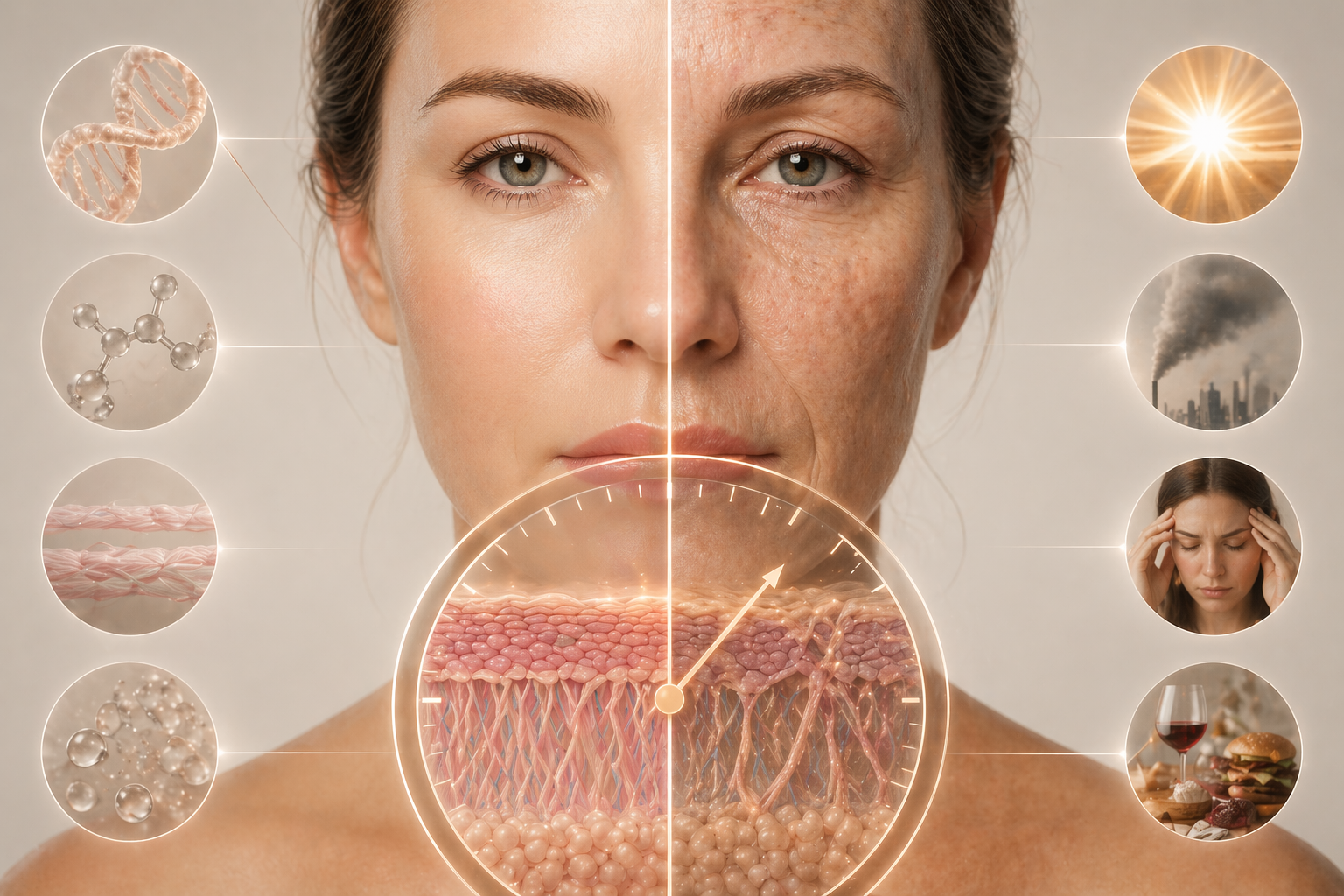
Age is often used as a reference point for treatment planning. However, chronological age, the number of years a person has lived, does not consistently reflect how the skin is functioning. Increasingly, research and clinical observation support a more useful framework: skin biological age, which reflects the skin’s condition at a cellular, structural, and functional level.
Understanding biological age allows professionals to move beyond time-based assumptions and toward a more precise evaluation of skin health, performance, and resilience.
Defining Skin Biological Age
Skin biological age refers to the physiological state of the skin, determined by how effectively it performs key functions, including:
Cellular turnover and regeneration
Collagen and elastin production
Barrier integrity and repair capacity
Inflammatory regulation
Hydration balance and lipid composition
Two individuals of the same chronological age may present with markedly different biological skin ages depending on these factors. This distinction is particularly relevant when assessing treatment readiness, recovery potential, and long-term outcomes.
Mechanisms That Drive Skin Aging
Skin aging is influenced by both intrinsic (internal) and extrinsic (external) processes. These mechanisms collectively determine biological age.
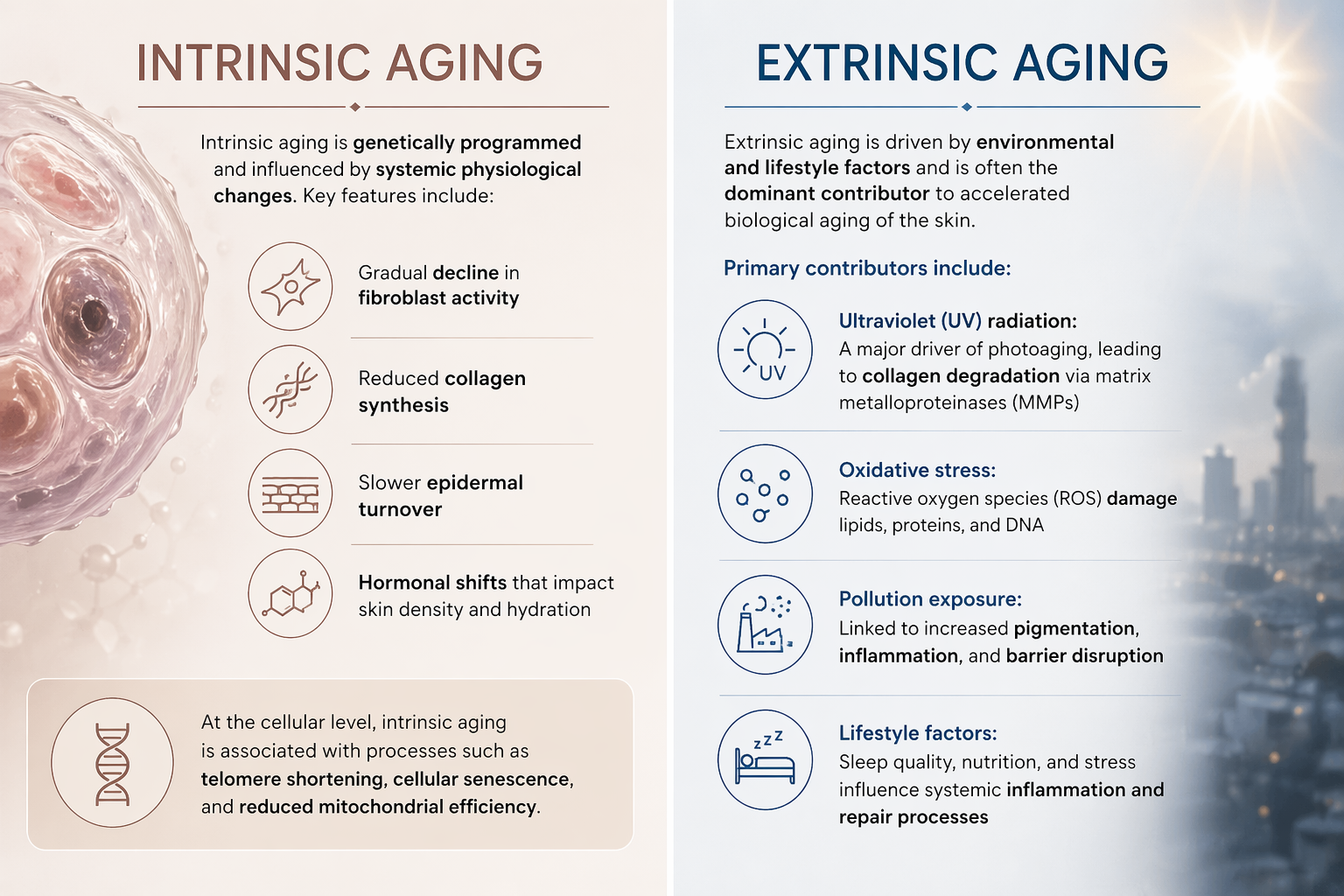
Unlike intrinsic aging, many extrinsic factors are modifiable, making them central to prevention and intervention strategies.
Functional Indicators of Biological Skin Age
Rather than relying solely on visible signs such as wrinkles or laxity, biological age is better understood through functional markers:
Indicators of Increased Biological Age
Delayed wound healing or post-treatment recovery
Persistent or low-grade inflammation
Compromised barrier function (e.g., increased transepidermal water loss)
Reduced elasticity and structural support
Irregular pigmentation and uneven tone
Indicators of Lower Biological Age
Efficient epidermal turnover
Rapid recovery following treatments
Intact barrier function and balanced hydration
Even pigmentation and consistent skin tone
Resilient response to environmental stressors
These indicators provide a more accurate representation of how the skin will respond to professional treatments and home care.
Implications for Treatment Planning
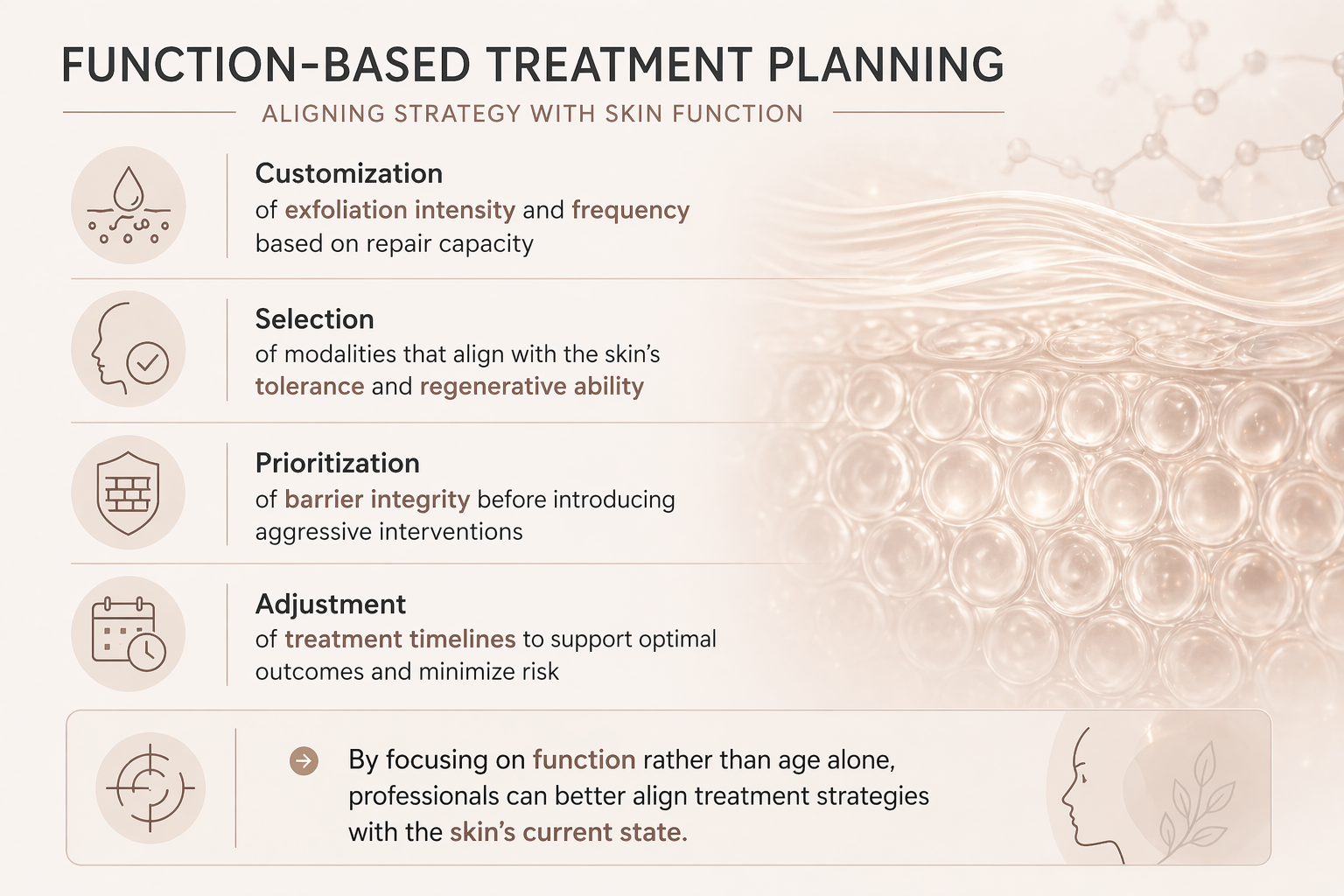
Incorporating biological age into clinical assessment supports a function-based approach to treatment planning. This approach emphasizes:
Supporting Skin Longevity
Addressing biological age is less about reversing visible aging and more about maintaining and optimizing skin function over time. Evidence-based strategies include:
Photoprotection: Daily, consistent use of broad-spectrum sunscreen to reduce UV-induced damage
Antioxidant support: Topical and systemic approaches to mitigate oxidative stress
Barrier repair: Use of ingredients that support lipid balance and hydration
Controlled stimulation: Treatments such as chemical exfoliation or microneedling applied with consideration of the skin’s regenerative capacity
Advanced ingredients: Peptides, growth factors, and other signaling molecules that support cellular communication and repair
These interventions aim to preserve structural integrity, support repair mechanisms, and reduce cumulative damage.
A Shift Toward Functional Aging
The concept of skin biological age reflects a broader shift in skin health: from focusing on visible correction to understanding and supporting underlying function. As research continues to evolve, this framework provides a more comprehensive way to assess, treat, and maintain the skin over time.