Professional’s Guide to Advanced Treatments: Energy-Based Treatments (Radiofrequency, Ultrasound ...
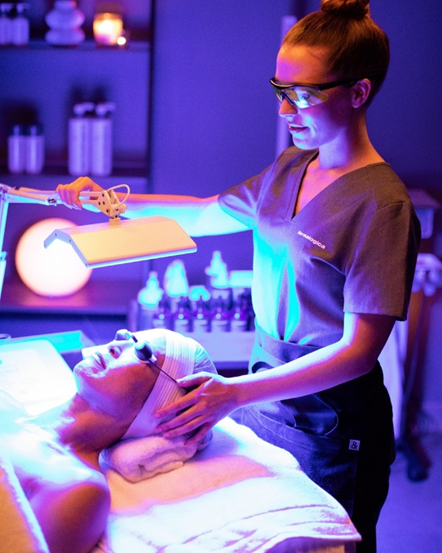
Energy-based treatments are often grouped together because they do not rely on visible exfoliation or mechanical injury. Instead, they influence the skin through stimulation, encouraging the tissue to respond rather than removing layers of it.
Because these modalities frequently involve little to no visible downtime, they are sometimes assumed to be passive. In treatment, they demand just as much clinical judgment as any other advanced treatment.
Understanding what type of response each modality asks of the skin, and whether the skin is prepared to respond, determines whether the outcome is supportive or disruptive.
Radiofrequency: Heat as a Remodeling Signal
Radiofrequency treatments work by creating controlled heat within the dermis. This thermal stimulation signals the skin to remodel collagen and gradually improve firmness.
Rather than removing tissue, RF relies on the skin’s healing capacity. When the barrier is stable and inflammation is low, the tissue often responds with improved density and resilience. When the skin is reactive or vascularly unstable, the same stimulation may increase redness, sensitivity, or prolonged warmth.
RF is therefore less about intensity and more about tolerance.
It is most appropriate when the goal is gradual improvement in firmness, texture, or overall skin quality. It is less appropriate when inflammation is active, the barrier is impaired, or the client is still fluctuating in reactivity.
The treatment does not force tightening, it invites remodeling.
Ultrasound: Supporting Structure Beneath the Surface
Ultrasound-based treatments differ from RF in that they influence deeper supportive structures rather than broadly heating the dermis.
This makes them useful when the concern relates more to structural support than surface quality. Clients often associate this with lifting, but the effect depends on the skin’s ability to respond to deeper stimulation over time.
Because the signal reaches beyond superficial layers, tissue readiness becomes even more important. Skin that is thin, inflamed, or recovering from recent procedures may not tolerate deeper stimulation well, even if laxity is present.
In these cases, preparing the skin first often produces better long-term outcomes than treating immediately.
Ultrasound can support structure, but only when the tissue is prepared to handle structural demand.
LED: Regulation Rather Than Correction
LED therapy functions differently from both RF and ultrasound. It does not rely on heat or injury, but on cellular signaling.
Light energy encourages the skin to regulate itself, supporting repair processes, calming inflammation, and improving overall skin behavior gradually. The results are cumulative and subtle, but often important for maintaining stability.
Because of this, LED is often most valuable when the goal is not correction, but support:
calming reactive skin
assisting recovery after treatments
maintaining progress between corrective services
LED rarely replaces other treatments. It improves the environment in which those treatments succeed.
Choosing the Appropriate Modality
Energy-based devices are sometimes treated as interchangeable solutions. In reality, each modality asks the tissue to respond differently.
Rather than choosing a device based on trend or availability, it is more useful to consider what the skin needs:
If the tissue requires support and gradual remodeling → heat-based stimulation may be appropriate
If deeper structural response is the priority → targeted depth may be useful
If regulation and recovery are needed → signaling and calming may be more beneficial
Equally important is recognizing when stimulation should wait. Unstable skin does not respond predictably to additional demand.
Timing and Integration With Other Treatments
Energy-based treatments are frequently layered with other modalities such as chemical peels or microneedling. When done thoughtfully, this can improve outcomes. When done prematurely, it can prolong recovery.
Introducing stimulation onto already stressed skin often increases sensitivity without improving results. In many cases, allowing the skin to stabilize before adding energy produces more consistent improvement.
Professional Responsibility
Although these treatments are often described as low-downtime, they still require careful assessment, clear communication, and adherence to scope of practice.
Successful use depends on:
appropriate candidate selection
realistic expectations
treatment spacing
post-treatment guidance
Technology expands capability, but it does not replace professional reasoning.
Always consult device manufacturer protocols, local regulations, and scope of practice guidelines before performing any advanced treatment.