Lymphatic Drainage: How the Lymphatic System Moves
Lymphatic drainage has become a popular topic thanks to gua sha tools, facial rollers, and brushes, but the effectiveness of these tools depends on how you’re using them.
The Lymphatic system doesn't work like blood circulation. It has no central pump like the heart. Because there is a lack of pump to create movement, it relies on gentle massage, muscle contraction, and clear pathways to transport lymph fluid.
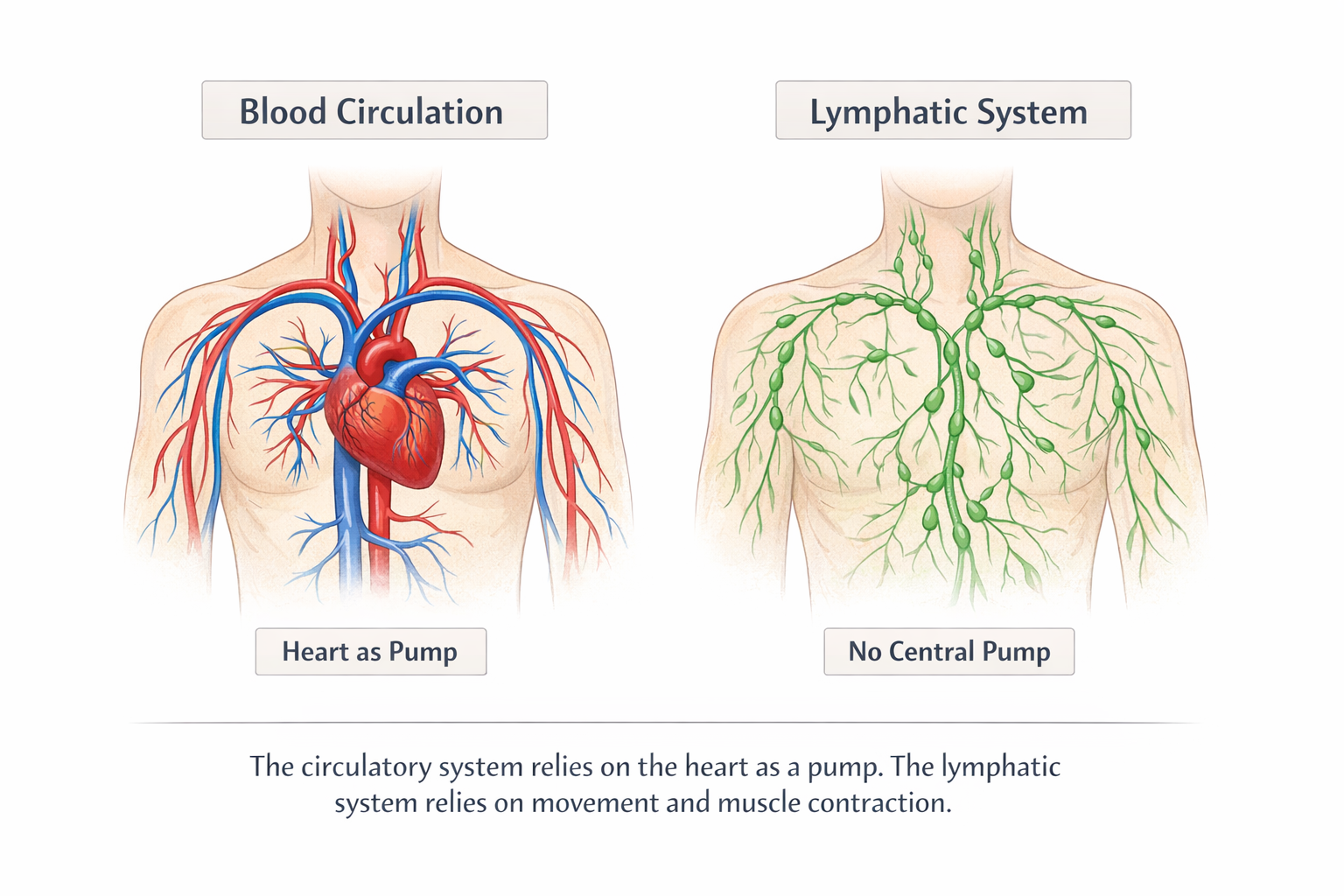
That’s why direction matters.
What Are We Draining?
Lymph fluid a clear fluid that contains excess interstitial fluid, cellular waste, metabolic byproducts, proteins, immune cells, and debris that the body needs to transport and filter.
Throughout the day, fluid naturally moves out of blood vessels and into surrounding tissue. The lymphatic system is responsible for collecting that excess fluid and returning it back into circulation after it passes through lymph nodes for filtration.
When this process is working efficiently, tissue looks balanced and healthy.
When it slows down, fluid can accumulate in the tissue spaces.
Why Drainage Matters for the Skin
The lymphatic system plays a quiet but significant role in how the skin looks and feels.
When lymph movement is sluggish, you may see:
• Puffiness (especially periorbital or lower face)
• Dull or heavy-looking skin
• Congested areas that don’t fully resolve
• A feeling of fullness or pressure in the tissue
Stagnant fluid can create an environment where waste removal is less efficient. Over time, this can contribute to a complexion that appears tired, swollen, or uneven.
This is not the same as inflammation, but it can sometimes look similar.
That distinction matters in the treatment room.
How the Lymphatic System Moves
Lymph fluid flows toward lymph nodes, not randomly across the face or “upward for lifting.”
Tiny initial lymphatic capillaries sit just beneath the surface of the skin. These vessels have delicate, one-way openings that allow fluid to enter when tissue pressure increases slightly. If too much external pressure is applied, those openings can collapse instead of absorb fluid.
On the face and neck, lymph primarily drains toward:
• Preauricular nodes (in front of the ears)
• Submandibular nodes (under the jaw)
• Cervical nodes (along the sides of the neck)
• Then downward toward the supraclavicular area (above the collarbones)
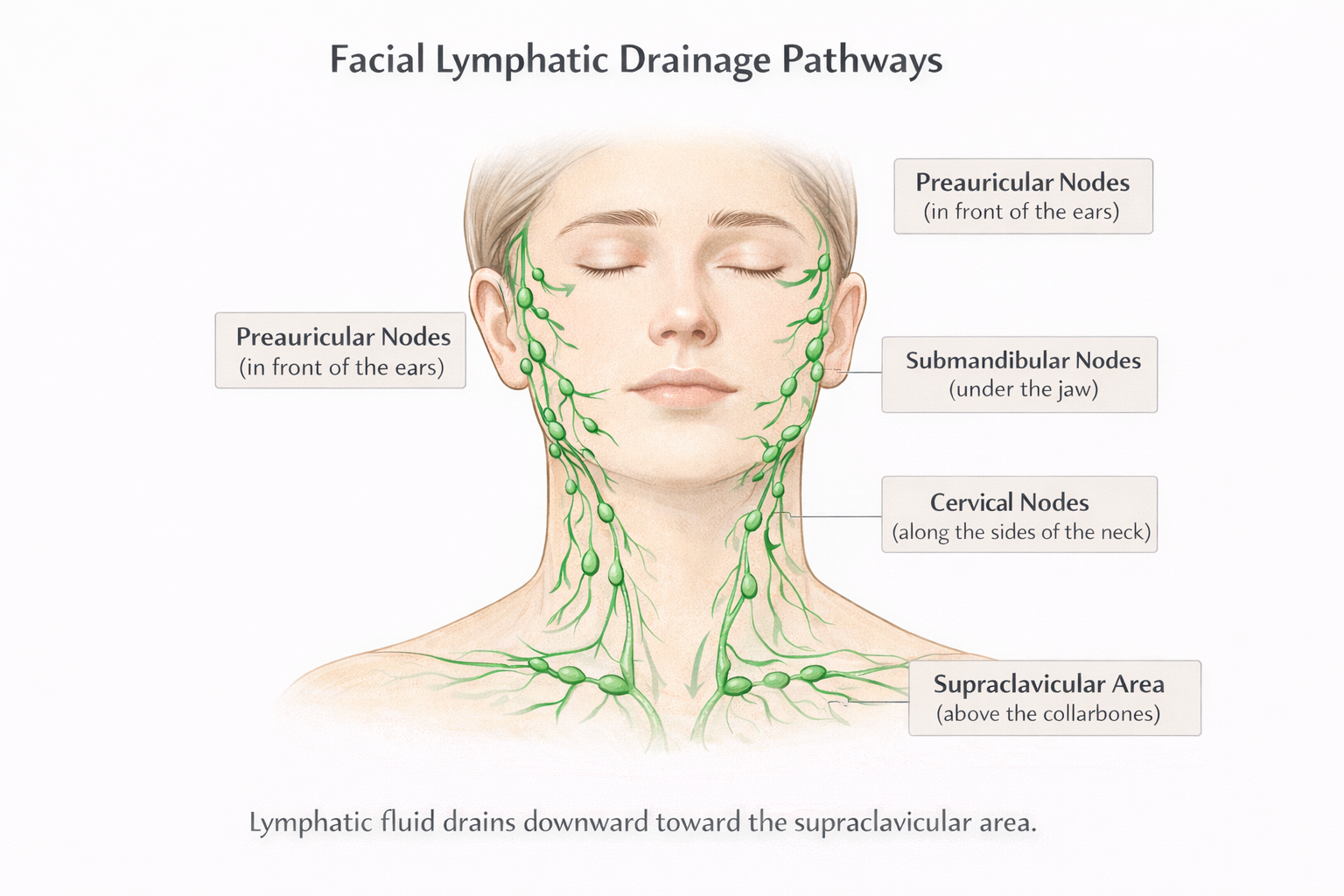
This means lymphatic work should always be performed toward a drainage point, not away from it.
Why Pressure Matters
Because lymphatic vessels are superficial and delicate, more pressure does not mean better results.
Deep, forceful sculpting can:
• Compress vessels
• Increase inflammation
• Push fluid without proper drainage pathways
True lymphatic technique is light, rhythmic, and slow. Think of encouraging fluid to move, not forcing it.
If the goal is drainage, restraint often produces better outcomes than intensity.
General Directional Guidelines (Face Focused)
While individual anatomy and treatment goals matter, these principles apply broadly:
• Forehead:
Move laterally toward the temples, then down toward the ears
• Eyes:
Upper eye → outward toward the temples
Lower eye → outward, then slightly down toward preauricular nodes
(Very light pressure only)
• Cheeks:
From the center of the face outward toward the ears
• Jawline:
From the chin along the jaw toward the ears
• Neck (front):
Gently down toward the supraclavicular area
• Neck (sides):
Downward toward the collarbones
A helpful rule of thumb:
Clear the neck pathways first, then work the face. If drainage points are congested, fluid has nowhere to go.
Lymphatic Stagnation vs. Inflammation
Not all puffiness is lymphatic. Lymphatic stagnation often presents as diffuse swelling, heaviness, or fluid retention that improves with gentle movement.
Inflammation, on the other hand, may include warmth, redness, tenderness, or barrier disruption. In these cases, aggressive “drainage” can further irritate tissue.
Understanding the difference allows you to choose the appropriate approach instead of treating all puffiness the same.

Common Mistakes That Can Stall Lymph Flow
Many people unknowingly work against lymphatic movement by:
• Using too much pressure
• Moving fluid upward without a drainage plan
• Overworking the same area repeatedly
• Skipping the neck and chest entirely
• Treating lymphatic massage like sculpting instead of drainage
Lymphatic work should feel subtle, slow, and calming, not aggressive or inflammatory.
Are Your Tools Helping or Hurting?
Tools themselves aren’t the issue, education is.
When used with correct direction, pressure, and intention, lymphatic tools can:
• Reduce puffiness
• Support fluid movement
• Improve skin comfort and tone
When used incorrectly, they may:
• Increase congestion
• Irritate tissue
• Create a temporary “lift” without true drainage
The Takeaway
Lymphatic drainage isn’t about pushing harder or following trends. It’s about understanding pathways, respecting anatomy, and working with the body’s natural rhythm.
When direction is correct and pressure is appropriate, less effort often creates better results.
True lymphatic work is subtle, and when done correctly, it supports the skin rather than overwhelming it.