Ingredients 101 Barrier Repair: The Science of Rebuilding Compromised Skin
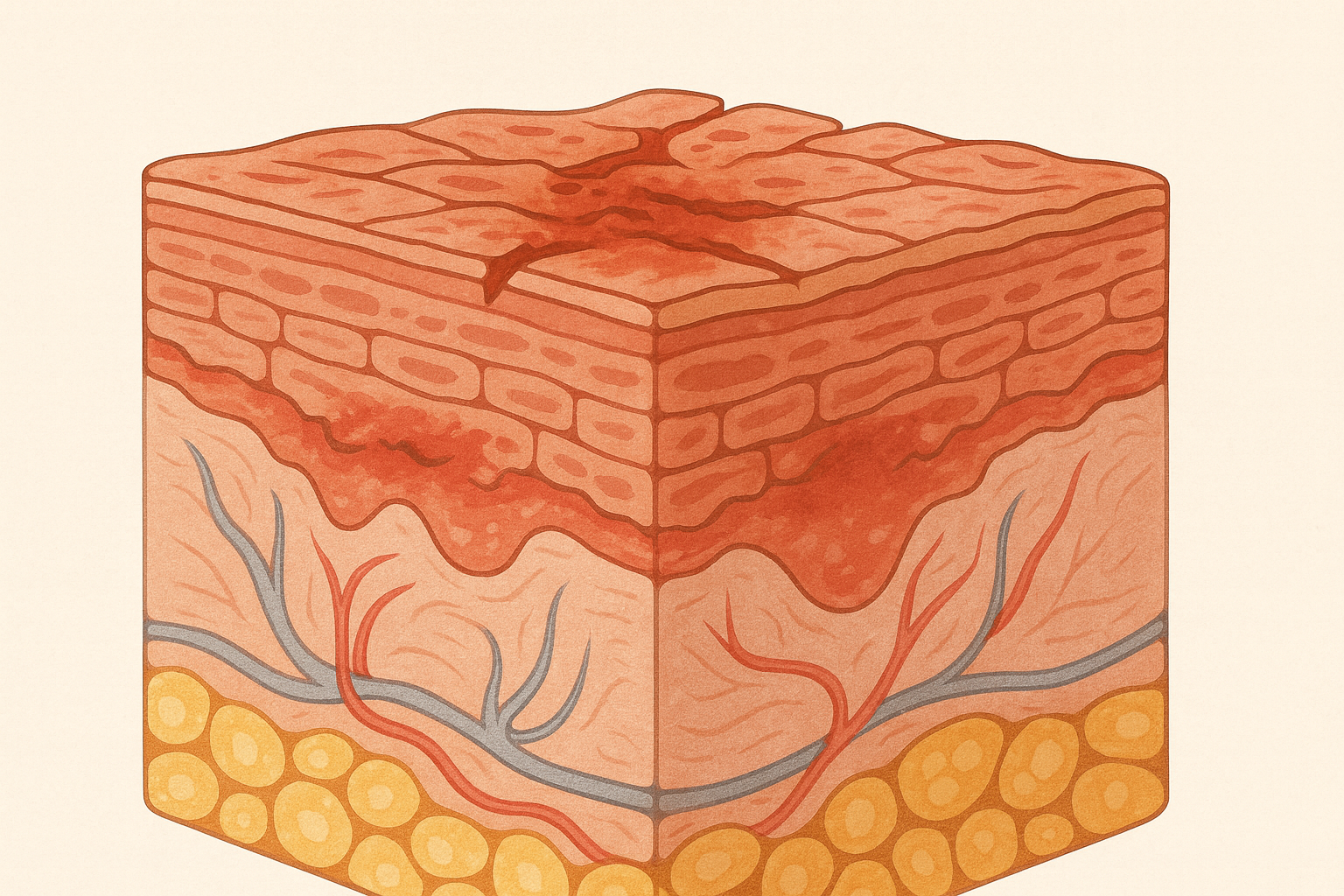
Your skin barrier is the unsung hero of healthy skin. It keeps water in, irritants out, and maintains the balance that allows every other product in your routine to work effectively.
But when that barrier is compromised, whether from over-exfoliation, environmental stress, harsh products, or underlying skin conditions, everything falls apart. Hydration doesn't stick. Sensitivity skyrockets. Inflammation becomes chronic.
Here's the thing: you can't repair a damaged barrier with hydration alone. You need the right structural components, lipids, ceramides, cholesterol, and fatty acids, to literally rebuild what's been broken down.
Let's talk about what actually works, how to spot barrier-repair ingredients on a label, and how to layer them for maximum recovery.
What Is the Skin Barrier (and Why Does It Break Down)?
The outermost layer of your skin, the stratum corneum, is often compared to a brick wall. The "bricks" are dead skin cells (corneocytes), and the "mortar" is a lipid matrix made of:
Ceramides (50%)
Cholesterol (25%)
Free fatty acids (15%)
Other lipids (10%)
When this lipid matrix is depleted, the barrier becomes porous. Water escapes. Irritants penetrate. The skin becomes reactive, dry, and inflamed.
Common causes of barrier damage:
Over-exfoliation (too many acids, retinoids, or scrubs)
Harsh surfactants (sulfates in cleansers)
Environmental stressors (pollution, UV, extreme weather)
Skin conditions (eczema, psoriasis, rosacea)
Aging (natural decline in ceramide production)
The solution isn't just adding moisture, it's replacing the missing mortar.
Ceramides: The Foundation of Barrier Repair
Ceramides are lipid molecules that make up the majority of the skin's barrier. Without them, the barrier can't hold together.
Ceramide NP (Ceramide 3)
INCI name: Ceramide NP
The most abundant ceramide in the skin. Essential for maintaining barrier integrity and preventing water loss.
What to look for: Ideally paired with Ceramide AP and Ceramide EOP for a complete lipid profile.
Ceramide AP (Ceramide 6-II)
INCI name: Ceramide AP
Supports exfoliation and barrier repair simultaneously. Deficiency is linked to eczema and atopic dermatitis.
What to look for: Often in formulas targeting compromised or reactive skin.
Ceramide EOP (Ceramide 1)
INCI name: Ceramide EOP
The largest ceramide molecule. It plays a critical role in binding the lipid layers together.
What to look for: High-performance barrier creams, especially for eczema-prone skin.
Phytoceramides
INCI name: Phytosphingosine, Ceramide NG
Plant-derived ceramides that mimic the skin's natural ceramides. Effective but slightly less potent than synthetic or bio-identical versions.
What to look for: Common in vegan or "clean" formulas.
Ceramide-Building Actives: Long-Term Barrier Strengthening
Ceramide-building complexes support endogenous ceramide synthesis, helping the skin restore its ability to produce, organize, and maintain its own barrier lipids over time. Rather than relying only on topical replacement, these systems promote long-term normalization of barrier function.
Best for:
Chronic barrier dysfunction, age-related lipid depletion, and recurring sensitivity where long-term barrier normalization is required rather than short-term surface repair.
Phytosphingosine
INCI name: Phytosphingosine
A naturally occurring ceramide precursor involved in ceramide biosynthesis. It supports lamellar lipid organization and reinforces barrier integrity by contributing to the formation of functional ceramides within the stratum corneum.
What to look for: Often included in advanced barrier-repair formulas alongside ceramides and cholesterol to support lipid synthesis and barrier resilience.
Biomimetic Lipid Actives
INCI names: Varies by technology (often listed as proprietary lipid complexes)
Engineered lipid structures designed to closely replicate the molecular behavior of native epidermal lipids. These actives integrate into the lamellar lipid matrix, supporting barrier cohesion and reducing transepidermal water loss (TEWL).
What to look for: Descriptions referencing “biomimetic,” “skin-identical,” or “lamellar” lipid technology in barrier-focused formulations.
Phytosterols
INCI names: Phytosterols, Beta-Sitosterol
Plant-derived sterols that support lipid matrix stability and help regulate epidermal lipid balance. Phytosterols contribute to barrier homeostasis and support recovery in compromised or inflamed skin.
What to look for: Frequently paired with ceramides and fatty acids in formulas designed for chronic sensitivity or barrier impairment.
Ceramide-Like Molecules
INCI names: Varies (may appear as pseudo-ceramides or ceramide analogs)
Structurally similar to native ceramides, these molecules integrate into the lipid bilayers of the stratum corneum, supporting barrier structure and improving moisture retention.
What to look for: Often used in formulations where enhanced barrier reinforcement is needed but full ceramide systems may be limited.
Signaling Peptides & Botanical Actives
INCI names: Varies by peptide or extract
Certain peptides and botanical compounds support epidermal repair pathways by signaling keratinocyte activity and lipid regulation, contributing to improved barrier recovery over time.
What to look for: Barrier-repair formulas that reference skin signaling, repair pathways, or epidermal renewal rather than immediate occlusion.
Cholesterol: The Underrated Barrier Builder
Cholesterol is essential for ceramide synthesis and lipid organization in the barrier. Without it, ceramides can't function optimally.
Cholesterol
INCI name: Cholesterol
Works synergistically with ceramides and fatty acids to restore the lipid matrix.
What to look for: Should appear alongside ceramides in a 1:1:1 ratio (ceramides:cholesterol:fatty acids) for maximum efficacy.
Fatty Acids: The Lipid Support System
Free fatty acids help organize the lipid layers and support the skin's natural repair processes.
Linoleic Acid (Omega-6)
INCI name: Linoleic Acid
An essential fatty acid that supports barrier function and reduces inflammation. Deficiency is common in acne-prone and eczema-prone skin.
What to look for: Often found in plant oils like sunflower, rosehip, and grapeseed oil.
Linolenic Acid (Omega-3)
INCI name: Linolenic Acid
Anti-inflammatory and supportive of barrier repair. Found in high concentrations in chia seed and flaxseed oil.
What to look for: Often in calming or reparative serums.
Oleic Acid (Omega-9)
INCI name: Oleic Acid
Helps other ingredients penetrate but can be comedogenic in high concentrations. Best for dry, non-acne-prone skin.
What to look for: Common in richer oils like olive and avocado oil.
Palmitic Acid and Stearic Acid
INCI names: Palmitic Acid, Stearic Acid
Saturated fatty acids that provide structure and stability to the barrier.
What to look for: Often in ceramide-rich creams, working as part of the lipid matrix.
Other Barrier-Supportive Ingredients
Niacinamide (Vitamin B3)
INCI name: Niacinamide
Stimulates ceramide production, strengthens the barrier, and reduces transepidermal water loss (TEWL).
What to look for: 2–5% concentration. Pairs beautifully with ceramides.
Panthenol (Pro-Vitamin B5)
INCI name: Panthenol
Hydrates, soothes, and supports wound healing. Converts to Pantothenic Acid in the skin, which aids in barrier repair.
What to look for: 1–5% in calming and reparative products.
Colloidal Oatmeal
INCI name: Avena Sativa (Oat) Kernel Flour
Rich in beta-glucan and avenanthramides, which soothe inflammation and support barrier recovery.
What to look for: Common in eczema and sensitive skin formulas. Look for it in the first 10 ingredients.
Centella Asiatica (Cica)
INCI name: Centella Asiatica Extract
Promotes collagen synthesis, reduces inflammation, and accelerates barrier repair.
What to look for: 1–3% in serums and creams. Often paired with madecassoside and asiaticoside (active compounds in Centella).
Squalane
INCI name: Squalane
Mimics the skin's natural lipids and provides lightweight occlusion without clogging pores.
What to look for: Mid-to-high on the ingredient list in serums and moisturizers.
Petrolatum
INCI name: Petrolatum
The most occlusive ingredient available. It creates a protective seal that allows the barrier to heal underneath.
What to look for: In slugging products, healing ointments, or as a final step for extremely compromised skin.
The Ideal Barrier-Repair Formula
The most effective barrier-repair products contain:
Multiple ceramides (Ceramide NP, AP, and EOP)
Cholesterol in a balanced ratio with ceramides
Fatty acids (linoleic, linolenic, or both)
Humectants (like hyaluronic acid or glycerin) to prevent the formula from feeling too heavy
Occlusives (like dimethicone or petrolatum) to seal everything in
Layering for Barrier Recovery
Morning:
Gentle, pH-balanced cleanser (avoid sulfates)
Hydrating toner or essence (optional)
Niacinamide or peptide serum
Ceramide-rich moisturizer
SPF (mineral-based if skin is very reactive)
Evening:
Oil-based or micellar cleanser
Hydrating serum (hyaluronic acid or panthenol)
Ceramide + cholesterol cream
What to avoid during barrier repair:
Acids (AHAs, BHAs) until the barrier is restored
Retinoids (unless prescribed for barrier conditions like rosacea)
Fragrance, essential oils, and potential irritants
Hot water and over-cleansing
Next Week: Ingredients 101: Anti-Aging Actives ⏳
Retinoids, peptides, and growth factors, separating marketing hype from the science of what reverses visible aging.