How Advanced Ingredients Support Skin Repair + Resilience: The Science of Cellular Communication
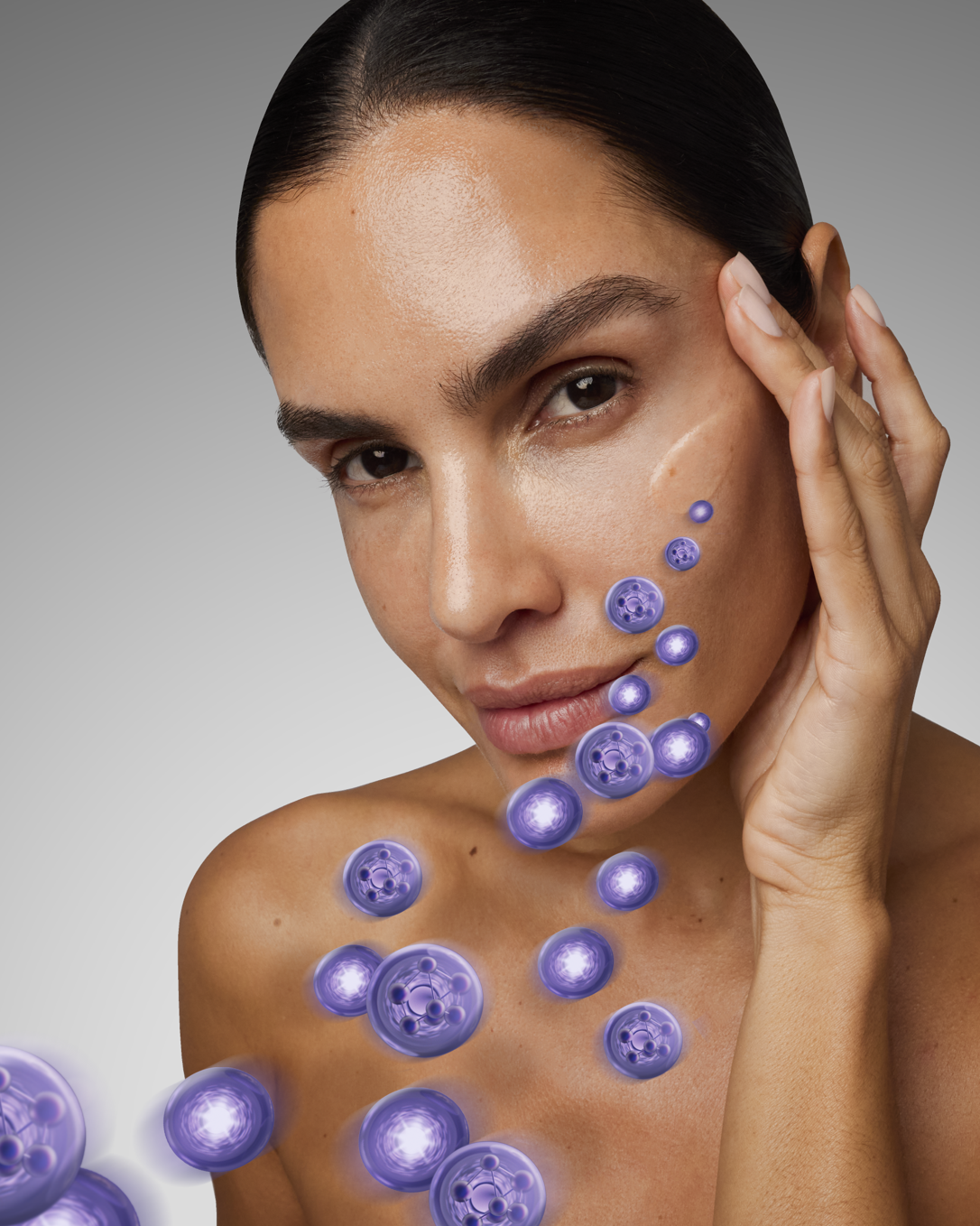
Your skin is constantly talking to itself. Every second, billions of cells exchange messages that determine whether your complexion will heal from damage, maintain its barrier function, or show signs of aging. Understanding this intricate communication network is key to appreciating how advanced skincare ingredients work, and why some formulations deliver transformative results while others fall short.
The Language of Skin: How Cells Communicate
Think of your skin as a bustling city where every cell is a resident that needs to coordinate with neighbors to keep things running smoothly. When your skin encounters stress, whether from UV exposure, pollution, injury, or the natural aging process, it triggers a cascade of cellular conversations aimed at repair and protection.
These conversations happen through multiple channels. Cells release signaling molecules like cytokines and growth factors that bind to receptors on nearby cells, triggering specific responses. They also exchange information through direct contact and, perhaps most fascinating, through tiny messengers called extracellular vesicles that ferry molecular cargo between cells.
When this communication system functions optimally, your skin maintains its integrity, repairs damage efficiently, and stays resilient. When communication breaks down, due to age, chronic inflammation, or environmental assault, you see the visible signs: delayed healing, increased sensitivity, loss of firmness, and accelerated aging.
The Repair Response: A Symphony of Cellular Activity
Skin repair isn't a single event but rather an orchestrated sequence that requires precise cellular coordination. When damage occurs, your skin initiates a multi-phase response:
The inflammatory phase begins immediately, with cells releasing distress signals that recruit immune cells to clear debris and prevent infection. This is where you might see redness or swelling, visible signs that your skin's defense system has been activated.
The proliferative phase follows, characterized by rapid cell division and the production of new tissue. Fibroblasts spring into action, synthesizing collagen and other structural proteins. Keratinocytes migrate to close any gaps in the skin barrier. Blood vessels form to supply oxygen and nutrients to the healing tissue.
The remodeling phase can last for months, as the newly formed tissue is refined and strengthened. Collagen fibers are reorganized for optimal strength, and excess cells are cleared away, leaving behind repaired, functional skin.
Each phase depends on precise communication. Cells must know when to start proliferating, when to produce specific proteins, and when to stop once repair is complete. Disrupted signaling at any stage can result in impaired healing or, conversely, excessive tissue formation like scarring.
Beyond Single Ingredients: The Ecosystem Approach
Traditional skincare has often focused on individual star ingredients, vitamin C for brightening, retinol for anti-aging, hyaluronic acid for hydration. While these ingredients certainly have value, emerging science suggests that supporting the skin's own communication systems may be more powerful than simply supplementing with isolated compounds.
This is where we see a shift toward what might be called "ecosystem skincare", formulations designed not just to deliver active ingredients but to enhance the skin's innate repair mechanisms and restore healthy cellular dialogue.
Consider peptides, for instance. These short chains of amino acids can act as signaling molecules, mimicking the messages that cells naturally send to one another. When applied topically, certain peptides can stimulate collagen production by essentially telling fibroblasts to ramp up synthesis. Others modulate inflammation or support barrier repair by influencing how keratinocytes behave.
Growth factors represent another class of communication-supporting ingredients. These proteins naturally regulate cell growth, differentiation, and survival. In skincare, growth factors derived from plant stem cells or bioengineered sources can supplement the declining levels our skin produces as we age, helping to maintain more youthful cellular behavior.
Antioxidants do more than neutralize free radicals, they also influence cell signaling pathways. Oxidative stress doesn't just damage cellular components; it disrupts communication by triggering inflammatory signals and interfering with normal gene expression. By reducing oxidative stress, antioxidants help preserve the clarity of cellular messaging.
Exosomes: Nature's Information Packets
Among the most intriguing developments in regenerative skincare is the use of exosomes, tiny membrane-bound vesicles that cells naturally release to communicate with one another. Think of them as biological flash drives, loaded with proteins, lipids, and genetic material that can reprogram recipient cells.
Unlike individual signaling molecules that carry a single message, exosomes deliver complex information packets. A single exosome might contain hundreds of different microRNAs, proteins, and lipids, each capable of influencing cellular behavior. When an exosome is absorbed by a recipient cell, it can alter gene expression, modify protein production, and change how that cell responds to its environment.
In the context of skin health, exosomes play crucial roles in wound healing, tissue regeneration, and maintaining homeostasis. Research has shown that exosomes derived from stem cells can enhance fibroblast proliferation, stimulate collagen synthesis, reduce inflammation, and even influence pigmentation processes.
What makes exosomes particularly valuable in skincare is their ability to address multiple aspects of skin aging and damage simultaneously. Rather than targeting a single pathway, like a retinoid primarily affecting cell turnover or a peptide stimulating collagen, exosomes can modulate numerous cellular functions at once, potentially creating more comprehensive and natural-looking results.
From Lab to Real-World Outcomes
The practical implications of supporting cellular communication become clear when we look at clinical observations and user experiences with advanced formulations. People using communication-enhancing skincare often report improvements that go beyond what single-ingredient approaches typically deliver.
Enhanced healing capacity is one of the most notable outcomes. Skin that previously took weeks to recover from minor trauma, a peel, laser treatment, or even a blemish, may heal in days. This accelerated repair reflects restored cellular coordination, with cells responding appropriately to damage signals and executing the repair sequence efficiently.
Improved barrier function manifests as reduced sensitivity, less reactivity to environmental stressors, and better moisture retention. When keratinocytes receive proper signals, they produce optimal amounts of lipids and structural proteins, creating a more resilient barrier. People with compromised barriers often notice their skin becomes less reactive and can tolerate products that previously caused irritation.
Visible rejuvenation occurs as cellular communication patterns shift toward those of younger skin. Fibroblasts that receive youthful signaling cues produce more collagen and elastin. The result is improved firmness, reduced fine lines, and a more even texture. This isn't just surface improvement, it reflects genuine changes in the skin's structural integrity.
Sustained results distinguish communication-based approaches from purely symptomatic treatments. When you support your skin's natural repair and maintenance systems rather than just masking problems, improvements tend to be more durable. The skin becomes genuinely more resilient, better able to handle future stressors without assistance.
The Synergy Factor
One of the most important principles in advanced skincare is that supporting cellular communication works synergistically with other approaches. A comprehensive regimen might include:
Signal enhancers like exosomes or growth factors that directly support cellular dialogue and repair mechanisms, providing the information cells need to function optimally.
Barrier supporters including ceramides, cholesterol, and fatty acids that ensure keratinocytes can effectively protect underlying tissue and maintain proper hydration, creating an environment where cellular communication can function without constant stress signals.
Antioxidant networks featuring compounds like vitamin C, vitamin E, and ferulic acid that work together to neutralize oxidative stress and preserve the integrity of signaling pathways.
Targeted actives such as retinoids or acids that address specific concerns while the communication infrastructure ensures these interventions are integrated into healthy cellular behavior rather than forcing artificial responses.
The key is that these elements support and amplify one another. Exosomes might be more effective when the barrier is intact and oxidative stress is controlled. Retinoids may be better tolerated when cellular repair mechanisms are functioning optimally. The whole becomes greater than the sum of its parts.
Looking Forward: The Future of Intelligent Skincare
As our understanding of cellular communication deepens, we're likely to see skincare become increasingly sophisticated and personalized. Future formulations may incorporate multiple types of exosomes targeting different skin concerns, or customize delivery systems based on individual communication deficits.
We're also learning that supporting skin health is about more than just topical applications. Factors like sleep quality, stress levels, nutrition, and even the skin microbiome all influence cellular communication. The most effective approach to skin resilience will likely integrate multiple modalities, with advanced topical ingredients playing a crucial but not exclusive role.
What's clear is that we've moved beyond the era of simply supplying skin with what it lacks, vitamin deficiencies, moisture depletion, lost collagen, and entered an age where we can actively support the skin's own intelligence. By enhancing cellular communication, we're not forcing skin to behave in certain ways but rather providing the information and tools it needs to repair, protect, and renew itself naturally.
The Bottom Line
Healthy, resilient skin depends on cells that can communicate effectively with one another. When this communication network functions well, skin heals efficiently, maintains its barrier, produces adequate structural proteins, and resists the visible signs of aging. When communication breaks down, we see accelerated aging, impaired healing, and increased sensitivity.
Advanced ingredients that support cellular communication, including peptides, growth factors, and particularly exosomes, represent a fundamental shift in how we approach skincare. Rather than simply treating symptoms or supplying missing components, these ingredients work with the skin's natural systems to restore and enhance its innate repair and maintenance capabilities.
The result is skin that doesn't just look better temporarily but actually functions better, becoming more resilient and capable of maintaining its health over time. This is the promise of communication-focused skincare: not just treating skin, but truly transforming it from the inside out.
At IDI, our goal is always to translate complex science into practical, usable knowledge. Understanding the distinctions between these advanced ingredients empowers you to select products and treatments with confidence and to guide your clients with authority.