Cultural Competency in Advanced Skin Education
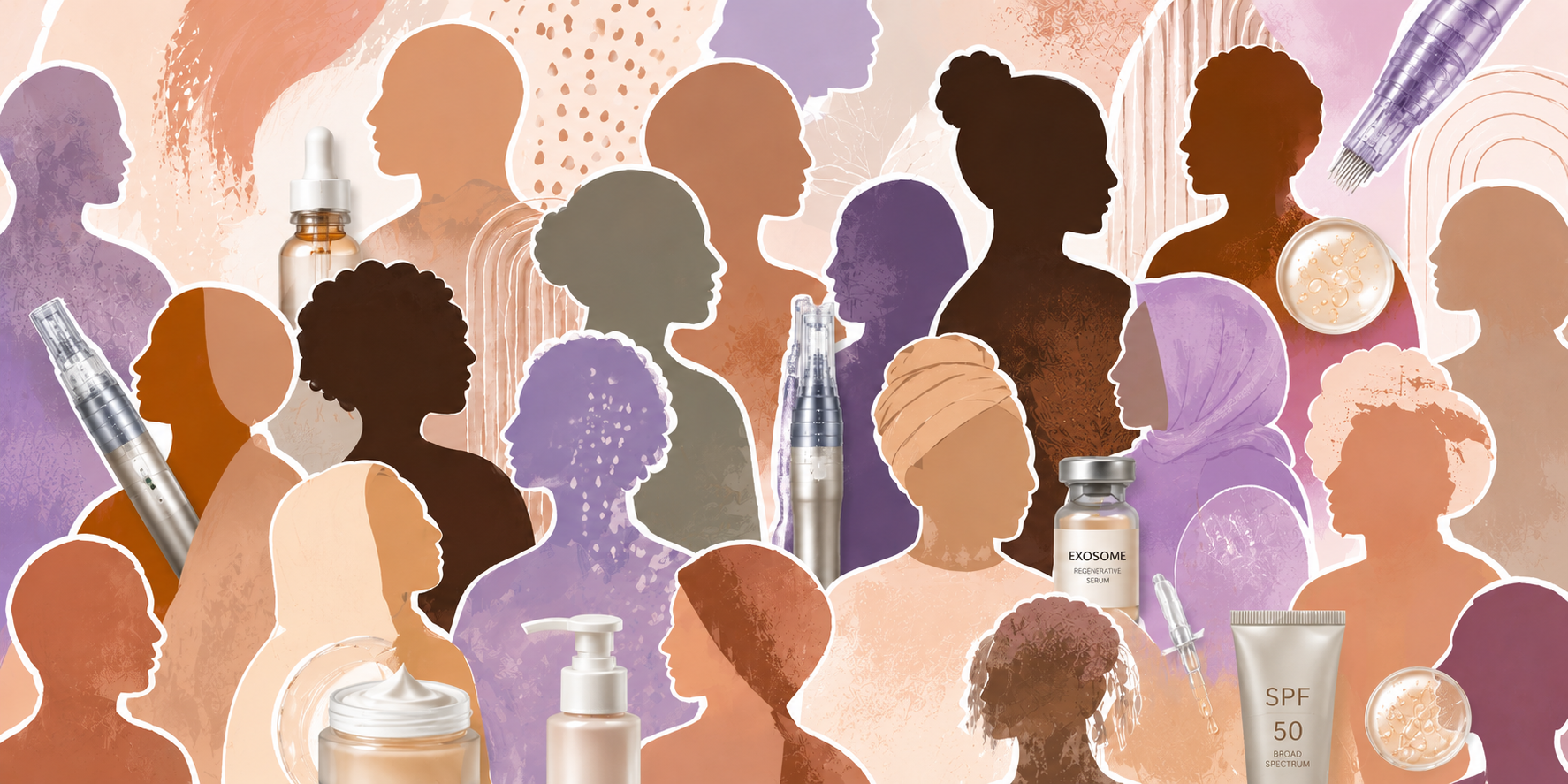
Advanced treatments are having a moment. If you’ve been to an esthetic trade show lately (or spent five minutes on skincare internet), you’ve felt it: microneedling everywhere, device education booming, and a whole lot of “next step” energy in the room.
And I love that for our industry, because growth is not the problem. But I’m going to say the quiet part out loud: as the stakes get higher, the gaps matter more. Especially the gap between protocol-based practice and person-based care.
Should cultural competency be mandatory in advanced skin education, especially for micro-injury treatments? Not as a “nice-to-have.” Not as an elective you take when you have time. Mandatory. Built in. Expected.
Because in 2026, “I treat all skin” can’t just mean we use the same settings on everyone and hope for the best. It has to mean we understand the lived realities that show up in the skin, and in the choices people can realistically make before and after a treatment.
Why this debate matters
Skin isn’t one-size-fits-all. Our communities vary wildly, by province, by city, by neighbourhood, by who has access to what kind of care.
Diversity shows up in the treatment room in different skin tones, hair removal practices, scar tendencies, pigment patterns, cultural beauty routines, faith-based considerations, and the very real differences in how clients interpret risk, downtime, and “a good result.”
So, the question becomes:
If advanced education is meant to prepare professionals for real practice…
…shouldn’t it also prepare professionals for real people?
The microneedling moment that made this stick for me
At a recent esthetics trade show, microneedling was everywhere, hands down the most common treatment being performed at exhibitor booths, whether the brand was showcasing a device, exosomes, or professional products in general.
But what stayed with me wasn’t the trend itself. It was how quickly some people were encouraged to hop on a demo bed, with minimal consultation, minimal screening, and minimal discussion about outcomes.
And I want to be fair: not every booth operated that way. Some teams were excellent, thoughtful model selection, proper precautions, informed consent, realistic expectations. But in the messy middle, it raised a bigger question: when advanced treatments become normalized as a quick add-on experience, what gets lost first?
In my opinion: nuance. And nuance is where safety lives.
What we mean by “cultural competency”
For this conversation, I’m using cultural competency in a practical way:
The ability to assess and treat clients safely and effectively by understanding how skin biology, lived experience, and lifestyle intersect, and to communicate in a way that builds trust and reduces risk.
In the treatment room, that can look like:
Pigment risk and how inflammatory response can present differently across skin tones
Keloid or hypertrophic scarring risk (and the discipline to say “not today” when someone isn’t a candidate)
Hair removal practices and how they impact barrier + inflammation (and therefore PIH risk)
Home care reality: what someone can afford, tolerate, access, and follow consistently
Communication + consent that’s respectful, clear, and not assumption-based
Bias awareness because we all have blind spots, and advanced treatments punish blind spots
The case FOR making it mandatory
Improve safety and outcomes
Micro-injury treatments can be life-changing when done well, and complication-heavy when done casually. The more we understand pigment risk, inflammatory cascades, and post-treatment behaviour differences, the more predictable healing becomes.
Standardize better consultation habits
Advanced treatments should come with advanced consult skills: screening, contraindications, expectations, and an aftercare plan that fits the client’s life.
Raise the standard for clinical reasoning
Protocols are a starting point, not the whole plan. Training should reinforce assessment, decision-making, and case-by-case planning (not copy/paste treatment plans).
Build trust with increasingly diverse communities
Trust isn’t a vibe. It’s built through competence, transparency, and clients feeling seen, not managed.
The case AGAINST making it mandatory
“My community isn’t diverse.”
That may be true today. But communities change, travel is common, and online consults are growing. Also, “not diverse” doesn’t mean “no cultural factors.”
“Cultural competency can become performative.”
Agreed. If it becomes a checkbox or a one-time module, it can do more harm than good.
“We can’t regulate nuance.”
Also, fair. Cultural competency isn’t a single skill, it’s a practice of learning, humility, and better questions.
So maybe the real debate is this: do we want cultural competency to be mandatory content… or mandatory accountability?
If we do make it mandatory, it has to be foundational and measurable (like sanitation, contraindications, and wound-healing fundamentals) and revisited over time, not treated as a one-and-done module.
My hot take (with love)
I don’t think we can keep treating cultural competency as optional while encouraging more professionals into advanced treatments.
If you’re creating controlled injury in skin, you owe that client a consultation and aftercare plan that matches their biology and their life.
And in Canada, “their life” is often shaped by culture, migration, family routines, climate adaptation, faith practices, work constraints, and access.
Discussion prompts
Drop your thoughts below, and share your region/country for context.
In your experience, where do you see cultural factors show up most: consult, treatment planning, or aftercare?
What’s one mistake you made early on that changed how you consult today?
If you teach advanced education: what would you actually include in a meaningful cultural competency module?
If you’re newer to advanced treatments: what support do you wish you had before you treated your first “higher risk” case?
Let’s keep it honest, respectful, and practical. We’re all here to get better.