Blepharoplasty Changes Skin Quantity. Topicals Change Skin Quality.
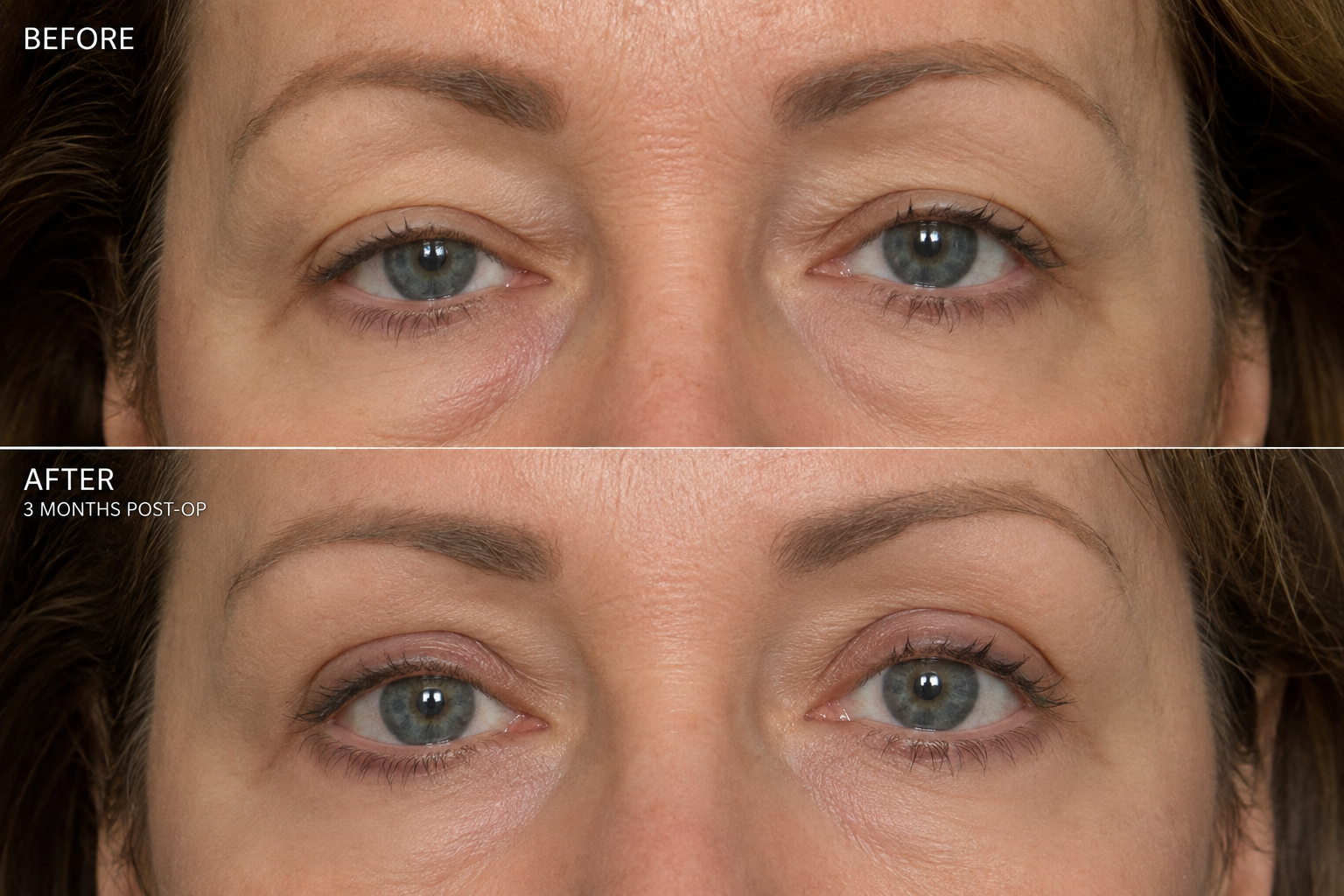
It's one of the most common conversations happening in treatment rooms today.
"I'm thinking about having my eyelids done."
Sometimes clients are asking your opinion. Sometimes they're looking for reassurance. And sometimes they've already booked the surgery and simply want to know how to care for their skin afterwards.
As skin care professionals, it's easy to feel that blepharoplasty sits outside our scope. But perhaps that's exactly why it's worth talking about.
Skin Quantity vs. Skin Quality
Blepharoplasty is one of the most effective procedures for correcting structural changes around the eyes. By removing or repositioning excess skin and fat, it can restore eyelid definition, improve visual heaviness and reduce prominent under-eye bags.
But here's the important distinction:
Blepharoplasty changes skin quantity. It doesn't change skin quality.
The skin itself continues to age biologically.
Collagen continues to decline. Glycation gradually stiffens collagen and elastin. Oxidative stress, chronic low-grade inflammation, UV exposure and barrier disruption continue to influence how the skin looks, feels and functions.
Fine lines, dehydration, crepiness, uneven pigmentation and reduced resilience don't disappear simply because excess skin has been removed.
In other words, surgery changes the structure. Skin care changes the tissue.
Another way to think about it is this: surgery creates a mechanical lift. Professional skin care supports a biological lift.
A surgeon can remove excess tissue and restore contour, but skin care helps maintain firmness, resilience and dermal density by supporting the biological processes within the skin itself. These are fundamentally different approaches, yet they complement each other beautifully.
That's why professional skin care remains just as important after surgery as it was before it.
Can Professional Skin Care Delay the Need for Surgery?
Let's set realistic expectations.
No ingredient, device or professional treatment can remove significant excess eyelid skin or reposition prolapsed fat pads. Those are structural concerns that may ultimately require surgery.
But clients don't wake up one morning suddenly needing a blepharoplasty.
The visible changes develop gradually over years, influenced by intrinsic aging alongside sun exposure, inflammation, lifestyle and environmental stress. By maintaining healthier skin throughout this journey, we can help preserve a fresher, more resilient appearance for longer. While we can't stop structural aging, we can influence many of the biological processes that contribute to visible aging.
For some clients, that may mean delaying surgery. For others, it simply means looking and feeling better at every stage of the aging process.
Our role isn't to compete with surgery. It's to optimize the health, function and longevity of the skin at every stage of life.
Supporting the Biology of the Eye Area
The skin around the eyes presents unique challenges. It is thinner than much of the face, contains fewer oil glands and is in constant motion through facial expression. These characteristics make it particularly vulnerable to collagen decline, dehydration and environmental damage.
Fortunately, advances in skin science have given us more tools than ever to support this delicate area.
One of the most exciting developments is the evolution of technologies designed to support both skin signaling and skin architecture.
As we age, the skin produces fewer of the signaling molecules that help coordinate repair, collagen synthesis and tissue renewal. Biomimetic growth factors are designed to help support these communication pathways, encouraging the skin to function like younger skin. Rather than acting as a quick fix, they work by supporting the biological environment needed for healthier, more resilient tissue.
Alongside these, advanced peptides help reinforce the skin's structural framework by supporting the appearance of dermal density and firmness.
Complementing these technologies are ingredients that help visibly improve eyelid firmness and resilience. Protein-rich botanical extracts and phytoactives can help improve the appearance of lifting and tightening, while antioxidants such as stabilized vitamin C and coenzyme Q10 can help defend against oxidative stress that accelerates visible aging.
Barrier-supporting ingredients including squalane, hyaluronic acid or pro-vitamin B5 can help replenish hydration and strengthen the skin's protective barrier, while appropriately formulated retinoids remain one of the most evidence-supported ingredients for encouraging collagen remodeling and improving skin texture over time.
None of these technologies can change the amount of skin around the eyes, but they can improve the appearance of eyelid firmness, skin density, hydration and resilience while supporting the biological processes that contribute to healthier skin over time.
They help maximize skin quality before surgery, maintain results afterwards and support clients who choose never to have surgery at all.
What About Instant Undereye Bag Removing Creams?
Great question, I’m glad you asked!
If you've spent any time on social media recently, you've probably seen videos demonstrating dramatic, almost immediate improvements in under-eye bags using products formulated with sodium silicate.
These products work very differently from the ingredients we've discussed so far.
Rather than improving the biology of the skin, sodium silicate forms a temporary film across the skin's surface. As that film dries, it contracts, creating a tightening effect that can temporarily reduce the appearance of puffiness, fine lines and under-eye bags. The results can be impressive and for some clients, they provide a useful cosmetic solution for a special occasion or short-term confidence boost.
However, it's important that clients understand what they're seeing.
The effect is cosmetic rather than biological. Once the product is removed, the appearance returns because the underlying skin hasn't changed. It isn't stimulating collagen production, improving dermal density or strengthening the skin's barrier function.
As skin industry professionals, this presents a valuable education opportunity.
Rather than dismissing these products, we can help clients understand the difference between an instant cosmetic effect and a long-term improvement in skin health. Both have a place, but they serve very different purposes.
A temporary tightening product may deliver an immediate visible result for a few hours.
A comprehensive skin care program built around barrier support, antioxidants, retinoids, peptides, growth factors and professional treatments works more gradually but aims to improve the health, resilience and appearance of the skin over time.
Professional Treatments That Complement Surgery
Professional treatments remain valuable whether a client is hoping to maintain youthful-looking skin or has already chosen surgery.
LED, gentle resurfacing when appropriate, hydration-focused treatments and progressive collagen-supporting protocols can all contribute to healthier skin over time. Once healing is complete and the surgeon has given medical clearance, professional lymphatic drainage techniques may also help clients experiencing temporary postoperative swelling.
The key is consistency.
Skin longevity isn't achieved through one treatment or one product. It's built through a long-term partnership between the client and their skin care professional.
Before Surgery, Healthy Skin Matters
If a client decides that blepharoplasty is the right choice, our role doesn't end.
Preparing the skin by optimizing barrier function, supporting hydration, minimizing irritation and encouraging diligent daily photoprotection helps create the healthiest possible environment before surgery.
After Surgery, Your Expertise Becomes Even More Valuable
Many clients assume that once surgery is complete, their concerns around the eye area are solved.
In reality, this is often when skin care becomes even more important.
Once the surgeon has cleared the client for professional treatments, your focus shifts toward supporting recovery and maintaining skin quality. Initially, this means calming the skin, restoring barrier function, maintaining hydration and protecting vulnerable tissue from UV exposure.
As healing progresses, attention turns toward supporting scar maturation, rebuilding skin resilience, gradually reintroducing active ingredients and maintaining collagen health over the years ahead. This is where technologies such as biomimetic growth factors and peptides can continue to support skin quality, helping clients maintain healthier, firmer-looking skin long after the surgical incisions have healed.
Bringing It All Together
As skin care professionals, we don't measure success by whether we can prevent someone from having surgery.
We measure success by helping clients achieve the healthiest, strongest and most resilient skin possible before surgery, after surgery or without surgery at all.
Because while a surgeon can change how much skin someone has, you help determine how healthy that skin will be.
And that may be the greatest value we bring to every client, regardless of where they are on their skin longevity journey.
The International Dermal Institute has researched and developed many eye creams and serums, including the Dermalogica products PhytoNature Lifting Eye Cream and Smart Eye Density.