Biohacking Skincare: What It Really Means for Skin Longevity
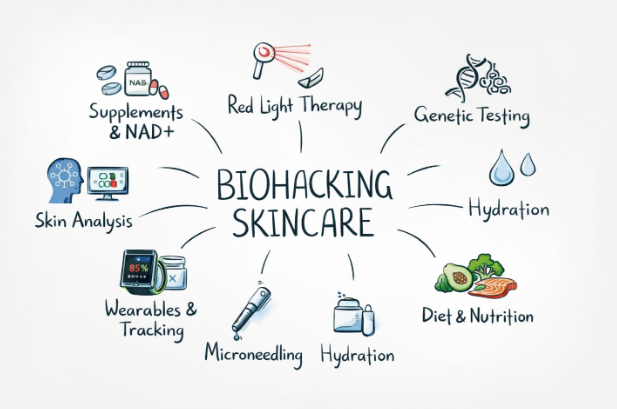
Biohacking has become a popular term across wellness culture. It is used to describe everything from wearable technology and supplements to cold exposure, breathwork, and personalized nutrition. While the language can feel trend-driven, the underlying principle is not new, especially in professional skincare.
At its core, biohacking is about making intentional, informed adjustments based on observation, feedback, and outcomes. In skin care, this mirrors the foundation of evidence-based practice: assess the skin, apply the appropriate intervention, observe how it responds, and adjust over time.
For skin therapists, this approach has long been standard practice. The difference today is that it is being named, measured, and discussed more openly as part of a broader conversation around skin longevity.
What Biohacking Means in a Skin Care Context
Biohacking refers to optimizing biological function through informed, measurable choices. Rather than following generalized recommendations, it focuses on how an individual system responds and adapts.
In the wider wellness space, this may include tracking sleep quality, adjusting nutrition based on energy levels, supporting circadian rhythm through light exposure, or managing stress to improve recovery. In every case, the objective is the same: to support the body’s ability to function, repair, and adapt more effectively over time.
Applied to skin, biohacking is not about extreme interventions or experimental trends. It is about understanding skin biology and working with it, rather than attempting to override it.
Biohacking as Professional Skin Therapy
In a professional setting, biohacking is not a departure from best practice. It is an evolution of it.
For skin therapists, a biohacking-informed approach may look like:
Customizing protocols based on observed skin behavior, not skin type alone
Tracking outcomes rather than relying on assumptions or timelines
Making considered adjustments based on tolerance, recovery, and response
Educating clients so they understand the reasoning behind changes
Using technology and data as support tools, not replacements for professional judgment
When framed this way, biohacking becomes a structured, thoughtful extension of evidence-based skin therapy.
Understanding the Systems That Influence Skin
Skin does not function in isolation. Its ability to tolerate treatments, repair the barrier, and age well is influenced by internal systems that regulate inflammation, stress response, and cellular energy.
Systemic Influences
Chronic inflammation, metabolic stress, hormonal shifts, and reduced cellular energy can all affect how skin behaves. These influences may present as slower recovery, increased sensitivity, impaired barrier function, or earlier visible signs of skin aging.
Recognizing these patterns allows professionals to interpret skin responses more accurately and avoid overcorrecting when the issue lies in recovery capacity rather than surface-level concern.
The Nervous System and Skin
The connection between skin and the nervous system is well established. Prolonged stress can compromise the skin’s ability to repair efficiently, often resulting in prolonged redness, delayed post-treatment recovery, or inconsistent responses to stimulation.
Supporting skin longevity means allowing sufficient time and the right conditions for repair.
A Biology-First Approach to Biohacking Skin
In skin care, biohacking is not about forcing results. It is about supporting function.
Barrier Support Comes First
The skin barrier plays a central role in hydration, defense, and ingredient tolerance. A biohacking-informed approach prioritizes barrier strength before increasing stimulation, allowing skin to respond more consistently to active ingredients and advanced treatments.
Respecting Cellular Communication
Skin cells rely on clear signaling to regulate pigment, inflammation, and collagen production. Chronic over-exfoliation or repeated injury can disrupt these signals, leading to unpredictable or diminishing results. Supporting healthy communication is essential for long-term skin resilience.
Stimulation With Recovery in Mind
Advanced treatments work by creating controlled stress. Biohacking emphasizes appropriate spacing, intensity, and recovery support so stimulation leads to regeneration rather than exhaustion.
Supporting Energy and Repair Capacity
Repair requires energy. When skin is adequately supported, it heals more efficiently, tolerates advanced treatments more effectively, and maintains results longer.
Measurement, Feedback, and Adjustment
One of the most valuable aspects of biohacking is feedback.
In practice, this may include baseline skin analysis, standardized progress imagery, monitoring sensitivity and hydration patterns, and adjusting protocols based on observed outcomes. This removes guesswork and allows decisions to be guided by what the skin is actually doing, not what it is expected to do.
Separating Science From Skincare Hype
As biohacking gains attention, misinformation often follows. Not every trending ingredient or device is supported by meaningful evidence.
Areas with stronger scientific support include physiologic lipid barrier repair, retinoids for cellular renewal, select peptides with proven signaling roles, antioxidants with validated stability, and regenerative technologies that support cellular communication.
Guiding Client Curiosity With Structure
Many clients are already experimenting with skin care. A biohacking framework allows professionals to guide this curiosity safely.
This includes establishing a stable foundation that remains consistent, allowing limited experimentation within defined parameters, setting realistic timelines, and reviewing progress together at regular intervals. This keeps the relationship collaborative while maintaining professional oversight.
The Professional Takeaway
Biohacking skin care is not about doing more. It is about being more intentional.
By focusing on skin biology, recovery, measurement, and personalization, professionals can improve outcomes and support long-term skin longevity. The future of skin care lies in precision, restraint, and respect for how skin functions.
Skin longevity begins with understanding biology. Professionals are uniquely positioned to lead that conversation.