Banking Collagen + Elastin: Supporting Skin’s Structural Integrity
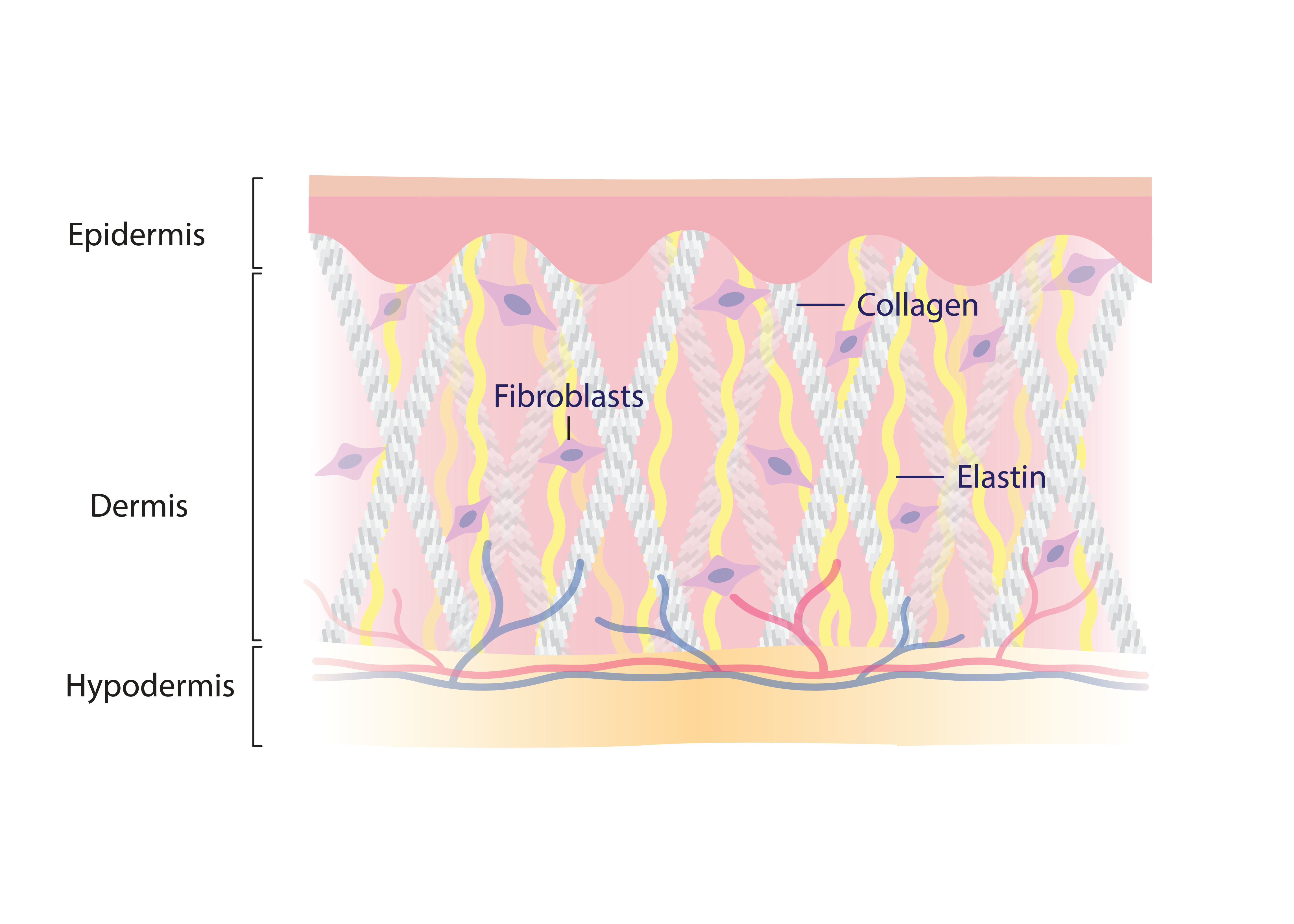
As licensed skin therapists, we know that what clients see on the surface is only a small reflection of the complex structural shifts occurring beneath the epidermis. Visible markers of aging, fine lines, reduced elasticity, deepening expression lines, and changes in overall firmness, directly correlate with the gradual decline of two key dermal proteins: collagen and elastin.
While intrinsic aging is inevitable, professionals play a pivotal role in helping clients preserve the integrity of these proteins and optimize the skin’s resilience over time. Through targeted treatments, evidence-based ingredients, and thoughtful lifestyle guidance, we can support the skin’s longevity at a cellular level.
Collagen: The Skin’s Structural Framework
Collagen is the most abundant protein in the human body, accounting for nearly 75% of the skin’s dry weight. Produced by fibroblasts within the dermis, collagen forms a dense, fibrous matrix that gives skin its strength, firmness, and structural integrity.
There are over 28 types of collagen in the body, but within the skin, Type I and Type III are the most prominent. These types work together to maintain dermal thickness and resilience while also playing an essential role in skin repair, barrier support, and hydration retention.
However, collagen synthesis naturally begins to slow as early as the mid-20s. By the age of 40, many individuals have lost up to 25% of their collagen, and this decline accelerates significantly following menopause.
Elastin: The Skin’s Recoil and Flexibility
Although elastin makes up a smaller percentage of dermal proteins, its function is critical. Elastin fibers allow the skin to stretch, recoil, and return to its original shape following facial movement or mechanical stress.
Unlike collagen, elastin production dramatically slows after puberty, making the preservation of existing elastin fibers especially important in age management. Once damaged, elastin fibers are extremely difficult for the body to regenerate, which is why prevention and protection are essential.
Environmental and Lifestyle Factors That Accelerate Loss
While intrinsic aging is unavoidable, several external and lifestyle factors can significantly accelerate the degradation of collagen and elastin.
UV Exposure
Ultraviolet radiation is the number one external cause of collagen breakdown. Chronic sun exposure triggers enzymes that degrade collagen fibers and contributes to the formation of abnormal elastin structures. Daily SPF use is a non-negotiable part of protecting skin integrity, rain or shine.
Pollution
Air pollutants such as ozone, smog, and particulate matter generate oxidative stress in the skin. This leads to inflammation and the gradual breakdown of collagen and elastin fibers, particularly in densely populated urban environments.
Poor Sleep
Chronic sleep deprivation increases cortisol, a stress hormone known to break down collagen and increase inflammation. Over time, this contributes to thinner skin, loss of elasticity, and more pronounced fine lines. Adequate sleep supports the body’s natural repair processes and collagen production.
Dehydration
Skin that lacks sufficient hydration cannot function optimally. Dehydrated skin becomes more vulnerable to fine lines and reduced resilience, making proper hydration an essential part of maintaining a healthy dermal environment.
Supporting Collagen and Elastin Through Skin Science
This is where advanced skin science and strategic skincare interventions become essential. Supporting collagen and elastin is not solely about repair, it also involves proactively preserving and protecting these critical structural proteins.
Targeted ingredients such as peptides, antioxidants, and hydration-optimizing actives help reinforce the dermal matrix, defend against environmental and oxidative damage, and support fibroblast activity, the very cells responsible for synthesizing collagen and elastin.
A Long-Term Strategy for Skin Resilience
Supporting collagen and elastin is not a one-time solution, it is a long-term strategy built on consistency.
The earlier the skin is supported, the more resilient, firm, and smooth it can remain over time. When we speak about investing in the skin’s future, this is the foundation: taking intentional steps today to preserve visible firmness, elasticity, and overall skin vitality for years to come.
Stimulate. Protect. Hydrate. Repeat.